Is It Worth Going To Fatima, Portugal?
An honest answer to whether Fatima is worth your Lisbon holiday time, with travel times, day trip prices, and which guided options make the long drive easy.
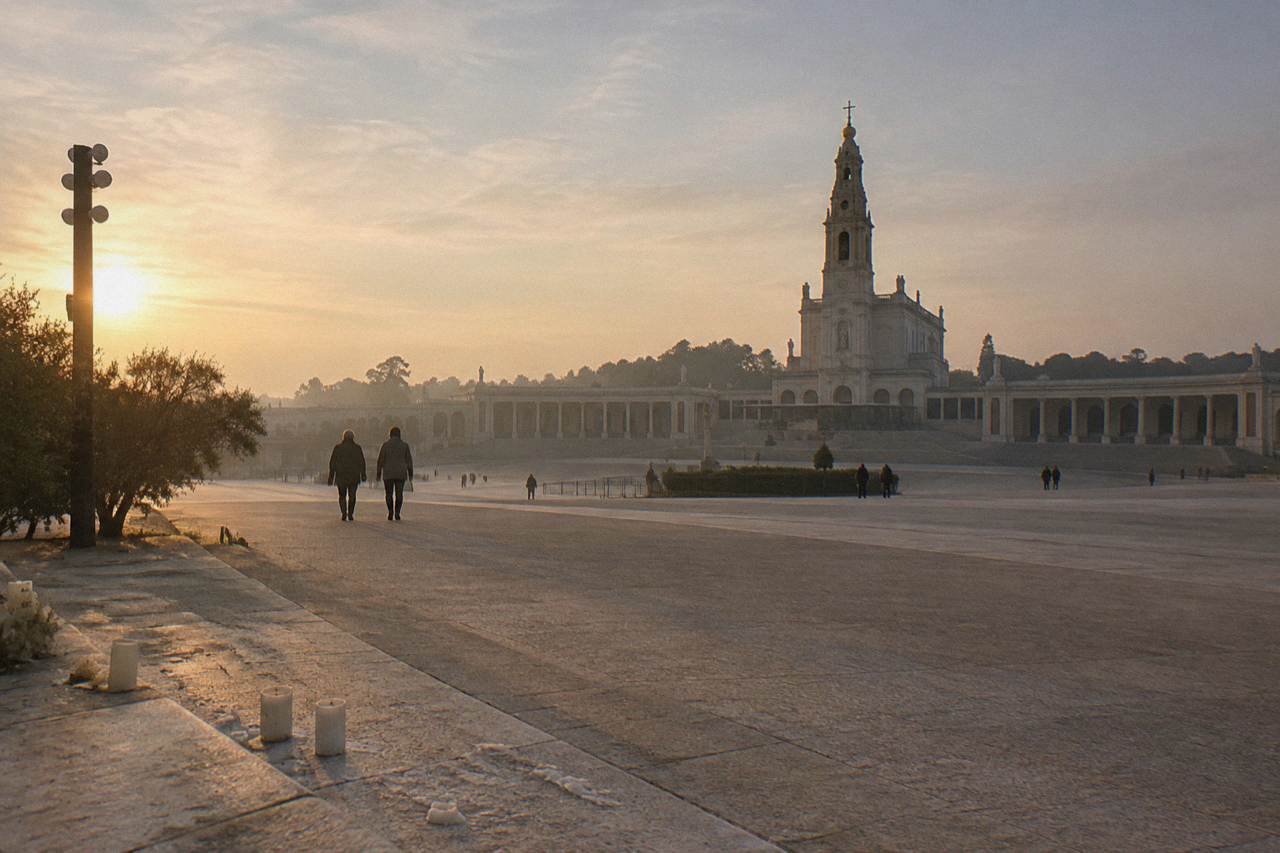
Fatima sits about 128 km north of Lisbon, and it draws pilgrims from every continent to a site that was a sheep field until a little over a century ago. That is a genuinely unusual thing to have within a ninety-minute drive of a city better known for custard tarts and fado. The question for most Lisbon visitors is not whether Fatima is interesting, it is whether it earns a full day of a short trip when Sintra, Cascais and the beaches of Arrabida are so much closer. The honest answer is that it depends almost entirely on what the day looks like: a bare-bones dash to the sanctuary can feel thin, while a day that folds in Batalha, Nazare and Obidos is one of the richest loops you can do from the capital. If you're wondering how long the walled town deserves on a loop like that, our practical timing guide to Óbidos compares an independent visit with joining one of the combined Fatima day tours.
Is It Worth Going To Fatima, Portugal?
Yes, if the sanctuary means something to you or you want to see one of the world's major pilgrimage sites firsthand; a combined day trip including Batalha, Nazare and Obidos makes the long drive pay off for any traveller, with tours from EUR 31 per person and the drive taking roughly an hour and a half each way.
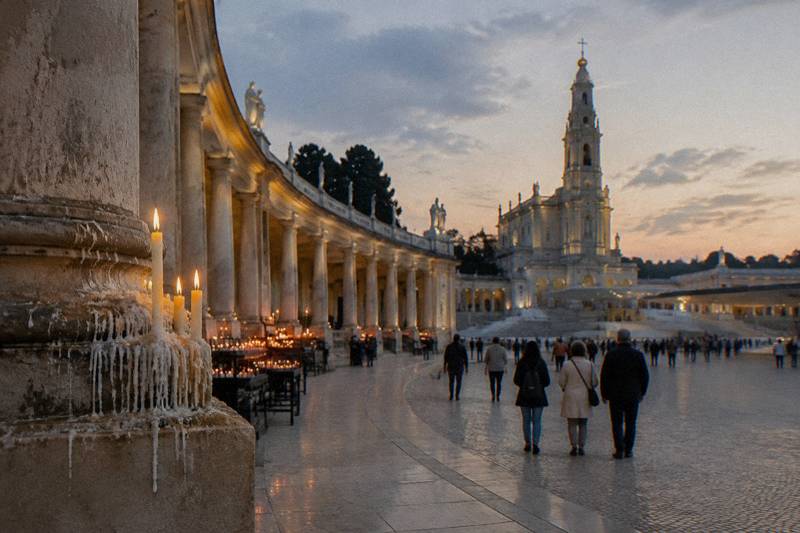
For a religious traveller the answer barely needs arguing. Fatima is a working pilgrimage destination, with an esplanade built for crowds far larger than a normal town square, a basilica holding the tombs of the three shepherd children, and the Capelinha das Aparições, the small chapel standing on the spot where the apparitions are said to have occurred. Even outside the major pilgrimage dates of 12 and 13 May and 13 October, the site has a calm, deliberate atmosphere that surprises visitors expecting a theme park of devotion.
For a secular traveller the calculus is different. The sanctuary complex itself takes about two hours to see properly, and the town around it is functional rather than charming. Driven there and back alone, that is a lot of motorway for a half-day experience. What tips the balance is that Fatima sits in the middle of one of Portugal's best day-trip corridors: the Batalha monastery, the fishing town of Nazare with its giant waves and clifftop sitter, and the walled village of Obidos are all on the same loop, and most guided days stitch several of them together.
That framing is why the combined tours are the practical answer for most people, and the cluster page on Lisbon Portugal Tours covering these routes gathers them in one place. The three formats below are the ones worth a first look: a max-8 van day, a small-group day from a well-established Lisbon operator, and a budget full day that includes lunch.
How Far Is Fatima From Lisbon And How Do You Get There?
Fatima is about 128 km from central Lisbon by road, a typical drive of about an hour and a half with tolls, and there is no direct train: rail journeys need transfers and take roughly the same time or longer, so most visitors go by car, coach or guided van. Once you're back in the capital, our breakdown of the best tram tour options in Lisbon explains how the city's famous vintage trams compare with the alternatives.
The road distance is the first number that shapes the decision. Michelin's route planner puts the Sanctuary of Fatima at roughly 128 km from central Lisbon, with typical driving times of about an hour and a half each way on toll motorways. That is real but manageable: it is shorter than the drive to Porto by half, and it is the same ballpark as Evora to the east. If you would rather let someone else handle the driving, our guide to the distance and travel options between Lisbon and Fatima also covers train connections and small-group tours.
The train is the option that trips people up. Fatima has no direct long-distance rail service from Lisbon; the journey requires transfers, with the fastest routings running about an hour and twenty minutes to over an hour and a half via a connecting leg, and the station at Seiça-Ourém still leaves you a taxi or bus ride from the sanctuary. For a day trip, the practical alternatives are a rental car, an intercity coach, or a guided day that handles the driving and the parking for you. A related piece on our site, how far Fatima is from Lisbon, breaks the transport options down stop by stop.
This is where a guided day quietly earns its keep. The Fatima loop parks badly on peak pilgrimage dates, the roads between Batalha, Nazare and Obidos are rural and signposted in Portuguese conventions that take a morning to get used to, and a van with a driver-guide turns nine or ten hours of logistics into a single seat you occupy. The question worth asking yourself is simple: do you want a driving day, or a seeing day?
What Do You Actually See At The Fatima Sanctuary?
The sanctuary's core is the vast esplanade, the Basilica of Our Lady of the Rosary with the children's tombs, the little apparition chapel at its heart, and the modern Church of the Holy Trinity; most visitors spend about two hours on site, and the outline below suits both pilgrims and the simply curious.
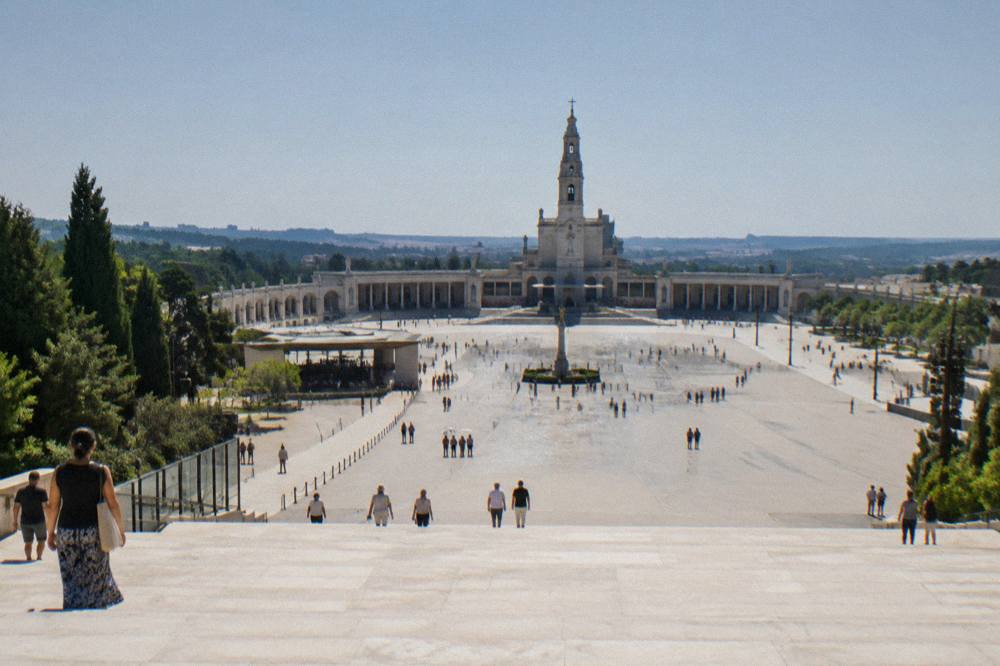
Start with the geography, because the site is bigger than photos suggest. The esplanade is one of the largest open religious spaces in the world, designed to hold crowds that arrive in the hundreds of thousands on the anniversary dates. At one end stands the neo-baroque basilica, where the tombs of Lucia, Francisco and Jacinta lie. At the centre of the esplanade sits the Capelinha das Aparições, a tiny stone chapel built on the spot where the apparitions are said to have occurred; a perpetually burning candle marks it, and pilgrims often approach it on their knees along a smoothed marble path.
At the opposite end rises the Church of the Holy Trinity, a vast modern circular church seating thousands. Around the edges you will find the Berlin Wall fragment memorial, a section of the wall donated as a tribute to the role the Fatima message played in Cold War-era Catholic Europe, plus the houses where the children lived in the nearby village of Aljustrel, a short shuttle or drive away. The sanctuary grounds are free to enter and open throughout the day.
For non-religious visitors, the honest framing is architectural and human. You are looking at a site that went from an empty field to one of the most visited pilgrimage destinations in the world within living memory of its beginnings, built entirely around the testimony of three illiterate children. Whether or not you share the faith, the scale of what was built in response to it is the story, and the museum on site tells that story well. Guests on one small-group day describe it plainly: "Wonderful experience. We got to see other parts of Portugal and see the landscape along the way. Long day but Fatima was amazing. Johnny was a great tour guide." That review, from Michele W on the listing, captures the typical arc: the drive is long, the arrival lands.
Fatima Alone, Or Fatima With Nazare And Obidos?
For most visitors the combined day is the better buy: Fatima alone leaves you with a long drive bracketing a two-hour visit, while adding Batalha, Nazare or Obidos fills the day with monasteries, ocean cliffs and a walled village, at a similar total price.
This is the real decision, and it deserves a table. The day trips below are the main formats available from Lisbon, drawn from the live listings, with prices as printed from each operator. Compare what each day actually contains rather than the headline price, because the spread is small and the itineraries differ a lot.
| Day trip format | From price | Duration | What the day includes | Format |
|---|---|---|---|---|
| Fatima, Nazare, Obidos 8-people group tour | EUR 80 per person | 9 hours | Fatima sanctuary, Nazare, Obidos, pickup included | Max 8 |
| Fátima, Nazaré and Óbidos small-group day (Inside Lisbon) | EUR 65 per person | 9 hours | Fatima, Nazare, Obidos, operated by a long-standing Lisbon operator | Small group |
| Fátima, Nazaré, Óbidos & Batalha full day with lunch | EUR 31 per person | 10 hours | All four stops plus a listed lunch | Group tour |
| Fatima, Batalha, Nazare, Obidos comfortable van trip | EUR 48 per person | 9 hours | All four stops in a max-8 van, pickup included | Max 8 |
Read the table as three philosophies. The budget full day at from EUR 31 packs all four stops and lunch into ten hours, and is the cheapest way to see everything, at the cost of a larger group. The small-group days cost more and trade the fourth stop for intimacy and pace: eight seats, a guide who can answer questions individually, and a van that parks closer to the old towns. All of these listings are flagged with free cancellation, though the window differs per listing, so the booking page is the place to confirm the terms before you commit.
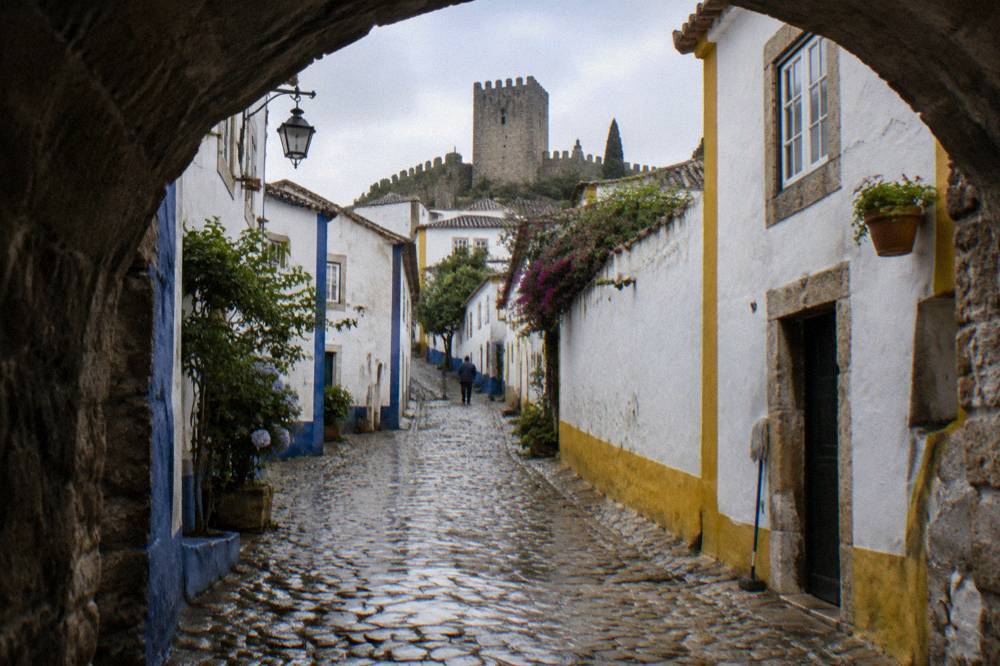
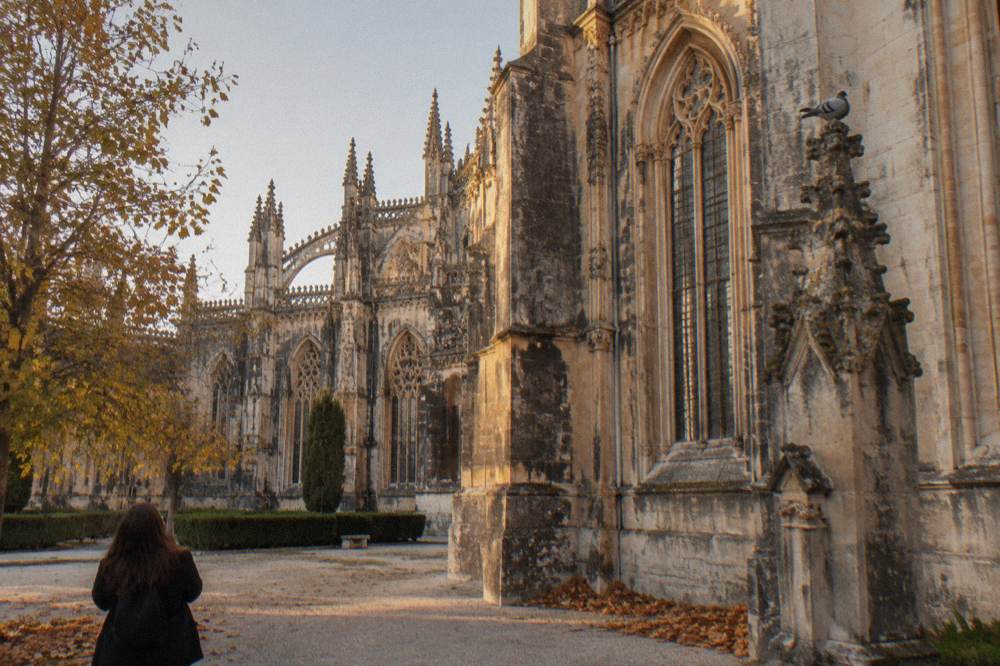
What the combined stops add is genuine. Batalha's Santa Maria da Vitoria monastery is a UNESCO-listed Gothic masterpiece built to commemorate a decisive medieval battle, with an unfinished chapel whose open tracery is unlike anything else in Portugal. Nazare is a working fishing town wrapped around a beach, with a funicular up to the clifftop Sítio district where the famous giant-wave viewpoint sits. Obidos is a compact walled town you can walk end to end in an hour, all whitewash and bougainvillea. If you want to weigh the coastal leg on its own, our piece on whether Nazare is worth a day trip goes deeper, and how much time Obidos needs settles the other half of the question.
What Does A Fatima Day Trip Cost All In?
Guided combined days run from EUR 31 to EUR 80 per person as printed on the listings, the Fatima sanctuary itself is free to enter, and the main extra costs are lunch where it is not included and any optional donations or shrine-site extras at Fatima.
The price spread is narrower than it first looks. The budget ten-hour day at from EUR 31 includes a listed lunch, which makes it arguably the strongest value on pure content per euro. The mid-range van days at from EUR 48 and EUR 80 exclude lunch but cap the group at eight, and the Inside Lisbon small-group day at from EUR 65 balances the two. The luxury end of this route is a private guide day, which the Fatima, Obidos and Nazare day trip cluster covers alongside the shared formats.
Against that, price out the self-drive alternative honestly. A rental car day, tolls both ways on the A1 and A8 corridors, parking at two or three towns, fuel and lunch for two will frequently exceed a pair of guided seats, and you will also be the one interpreting Portuguese road signage on rural legs. The sanctuary itself charges nothing for the esplanade, the apparition chapel or attendance at mass; the on-site museum and the children's houses in Aljustrel have modest entry fees you can check on site.
A working budget table for a party of two, using the printed tour prices and typical planning ranges rather than promises:
| Item | Typical planning range for two |
|---|---|
| Guided combined day tour | From EUR 62 total upward, set by the per-person prices above |
| Lunch on tours without one included | Usually EUR 15 to EUR 30 per person in Nazare or Obidos |
| Sanctuary entry, esplanade, chapel | Free |
| Optional extras at Fatima (museum, candles, Aljustrel houses) | A few euros each, pay on site |
| Self-drive alternative (car, tolls, fuel, parking) | Commonly comparable to two guided seats for a full loop |
The full-day option with lunch deserves its own word, because it is the one people underestimate. Ten hours sounds punishing, and it is long, but the pacing is the point: the drive segments are broken up by four distinct stops, so no single stretch of motorway outlasts the anticipation of the next town. Guests who choose it are buying completeness, the monastery and the coast and the shrine in one pass, and accepting a bigger group as the trade.
Is A Guided Tour Better Than Going On Your Own?
A guided day is the better choice for a short Lisbon stay, because the Fatima loop's value comes from stacking four stops into one driver-handled day; independent travel makes sense mainly for pilgrims who want unhurried time at the sanctuary or travellers with a car and a full spare day.
The case for the tour is arithmetic. The full loop from Lisbon to Fatima, Batalha, Nazare and Obidos covers well over 300 km of driving in a day. Doing it yourself means tolls, four sets of parking, reading old-town access restrictions that increasingly resemble Sintra's, and no narrative between stops. A guided day converts that dead time into context: the reported apparitions and the Portuguese political turmoil around them, why Batalha monastery exists, why Nazare's fishermen once wore specific kilts, why Obidos was a queen's wedding gift for centuries. The guides on these routes are the difference between a checklist and a story.
The case against is real too. Pilgrims attending a specific mass, wanting to walk the esplanade at dawn, or staying for the candlelit evening processions that the sanctuary holds will find a shared itinerary too rigid; those travellers should go independently, ideally by coach or car, and give Fatima the whole day. Visitors who simply want to light a candle and see the basilica, then move on to coast and countryside, are exactly who the combined tours were built for.
Pick the format that matches your tolerance, not just your wallet. The max-8 van days suit travellers who ask a lot of questions. The big-group coach days at the budget end suit travellers who are happy to wander each stop on their own and let the logistics be the product. The day trips from Lisbon compared guide covers which destinations reward the train instead, for the days you leave the van behind.
What If You Are Not Religious, Is It Still Worth The Day?
Yes, with expectations set correctly: the sanctuary is a striking piece of modern religious architecture and living social history, and it takes about two hours; the rest of the day's value comes from Batalha, Nazare and Obidos, which carry no religious dimension at all.
Treat the sanctuary the way you might treat a great cathedral you do not pray in. The esplanade's sheer scale, the contrast between the intimate apparition chapel and the monumental basilica behind it, and the sight of pilgrims completing devotions in the open air make it a document of human belief that photographs never quite capture. Two hours is enough for the esplanade, the chapel, the basilica interior and a walk to the Holy Trinity church. If the museum tempts you, budget an extra hour.
Then let the rest of the day do the heavy lifting. Batalha is stone and light, Nazare is salt and cliffs, Obidos is chocolate-box medieval with a wall you can actually walk. Guests on the small-group day report exactly this blend working, and reviews on the listings repeatedly describe the combination as a highlight precisely because no single stop has to carry the day. The van-based comfortable trip format stacks all four; the budget lunch-included day does the same at a lower price point.
One respectful note on tone: Fatima is a functioning shrine before it is an attraction. Dress modestly inside the basilica, keep voices low near the apparition chapel, and give pilgrims space at the candle stands and along the kneeling path. None of this is enforced officiously, but it is noticed, and it costs nothing.
When Is The Best Time To Do The Fatima Loop?
Weekdays outside the 12 to 13 May and 13 October anniversary dates are the calmest time to visit; those two pilgrimage anniversaries bring enormous crowds, and summer adds coach traffic, so spring and autumn weekdays balance weather, light and space best.
The anniversary dates define the calendar. Pilgrims converge on Fatima on the 12th and 13th of each month from May to October, with 12 to 13 May and 13 October the peaks, when the esplanade fills to capacity and the surrounding roads jam. If you are going as a pilgrim, those dates may be exactly the point. If you are going as a sightseer, any other Tuesday is a different, quieter experience.
Weather-wise, the loop sits inland at Fatima and on the Atlantic at Nazare, so conditions can differ noticeably between stops in a single day. Lisbon's climate normals from the national weather service give a sense of the seasonal spread: typical daily highs run from the mid-teens Celsius in winter to the high twenties in July and August, with rainfall peaking in October, November and December and drying almost completely in July. The coast at Nazare runs cooler and windier than the interior legs. Bring a layer for the clifftop even in summer; the sea breeze off the Atlantic is constant, and it is the one weather fact you can rely on.
Timing within the day matters as much as the season. The shared tours leave Lisbon in the morning and reach the coast by late afternoon, which puts Nazare in good light and returns you to the capital in the evening. Doing it independently, aim the same way: Fatima first while the esplanade is quiet, the monastery at midday, the coast last. The distance data behind the loop, roughly 128 km to Fatima and then rural roads north to Nazare and back through Obidos at about 84 to 87 km from Lisbon, is documented in route references such as Michelin's Lisbon to Fatima route, and the rail transfer reality is visible on the Omio Lisbon-Fatima rail listing.
The Verdict: Go, But Go With A Plan
Go, as part of a combined day, unless your interest in Fatima is specifically religious, in which case go independently and give the sanctuary the unhurried time it deserves; either way, the drive is too long to make the trip casually.
Folded into the straight answer this article opened with: Fatima is worth it as the anchor of a nine or ten-hour loop, and it is worth it as a destination in its own right for pilgrims. What it is not worth is a rushed round trip that spends five hours in a car for two hours on an esplanade. Choose your format deliberately, from the budget full day with lunch at from EUR 31 to the max-8 van days at from EUR 80, and let the itinerary carry the length of the drive.
Common Questions About Fatima
Is It Worth Going To Fatima, Portugal?
Yes, for most travellers, as part of a combined day trip that also takes in Batalha, Nazare and Obidos. The sanctuary itself needs about two hours; the surrounding loop is what justifies the roughly 128 km drive each way. Guided days run from EUR 31 to EUR 80 per person as printed on the listings.
How Far Is Fatima From Lisbon?
About 128 km by road, typically an hour and a half of driving each way with tolls. There is no direct train from Lisbon; rail journeys require transfers, which is why most visitors go by car, coach or guided van.
How Much Time Do You Need at the Sanctuary?
Plan on about two hours for the esplanade, the apparition chapel, the basilica with the children's tombs and the Church of the Holy Trinity. Add an extra hour if you want the on-site museum or the children's houses at Aljustrel nearby.
Can You Visit Fatima and Obidos in One Day?
Yes, easily, and most guided days add Nazare and often Batalha as well. The full loop is a nine to ten-hour day from Lisbon, with tours priced from EUR 31 to EUR 80 per person depending on group size and whether lunch is included.
Is Fatima Interesting for Non-Religious Visitors?
It can be, treated as architecture and living social history rather than devotion: a vast pilgrimage complex built within living memory of its beginnings, around three children's testimony. Pairing it with the monastery, the coast and the walled town keeps the day rewarding for every interest.
When Should You Avoid Visiting Fatima?
Avoid 12 to 13 May and 13 October if you want calm, as the anniversary pilgrimage dates fill the esplanade to capacity and jam the roads. For sightseeing rather than pilgrimage, a weekday outside those dates and the peak summer months is the comfortable choice.