Is Nazaré Worth A Day Trip?
A direct answer on whether Nazaré justifies a day trip from Lisbon, with real distances, transport limits, and the multi-town tours that include it.
Is Nazaré Worth A Day Trip?
Yes, for most travellers, but Nazaré works best as one stop on a multi-town day trip rather than a destination on its own. At 110 to 120 km from Lisbon, a 1.5 to 2 hour drive each way and no direct train, a standalone visit eats most of a day for somewhere you can see in two to three hours; pairing it with Óbidos and Fátima on an organized day trip makes better use of the day.
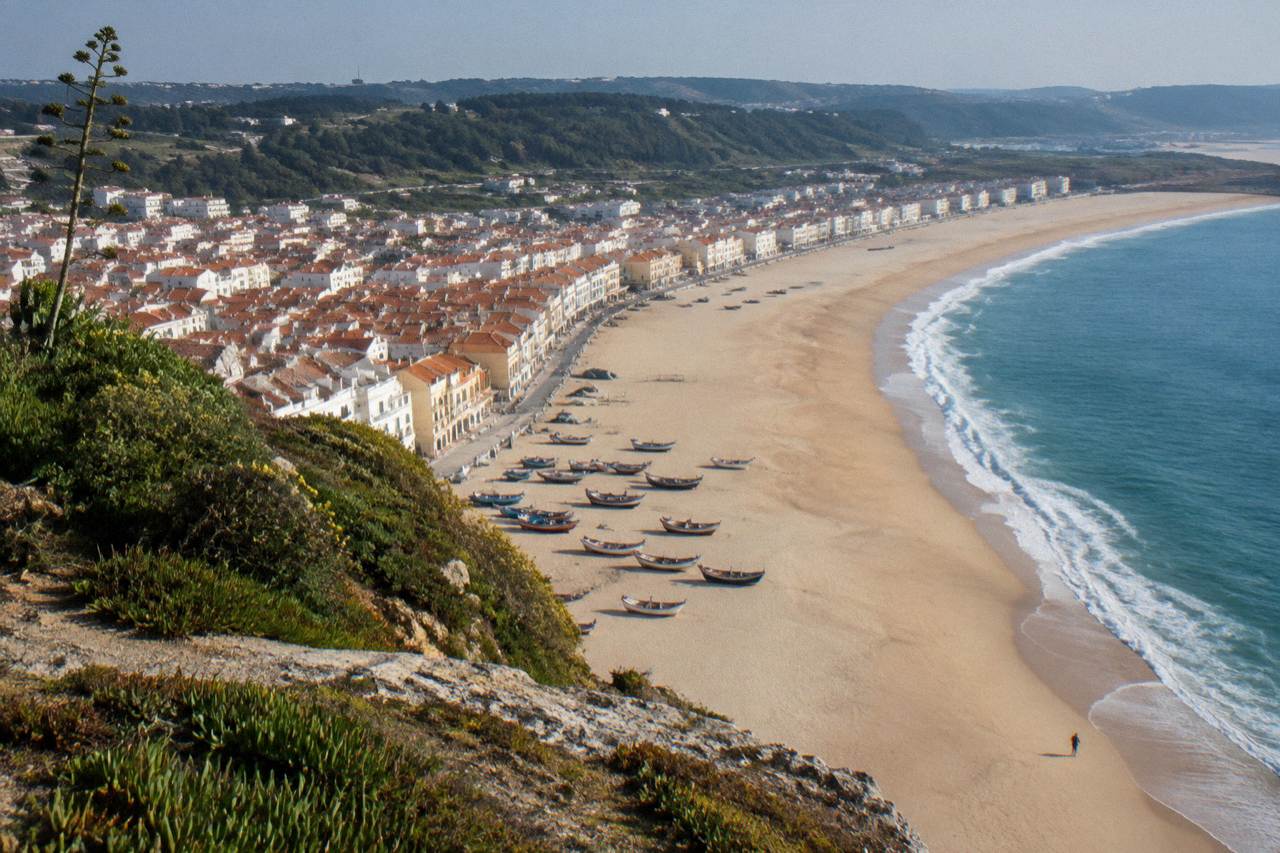
That is the short version. The longer version is about what kind of traveller you are and what you want from the Portuguese coast. Nazaré is a working fishing town that became world famous for one thing: enormous waves. In winter, the swells at Praia do Norte regularly produce some of the largest surfable waves on the planet, and the town's identity, its museum, its murals and its souvenir shops, all orbit that fact. In summer, the giant waves are gone, the beach is wide and calm, and the town settles back into a classic Atlantic family resort rhythm.
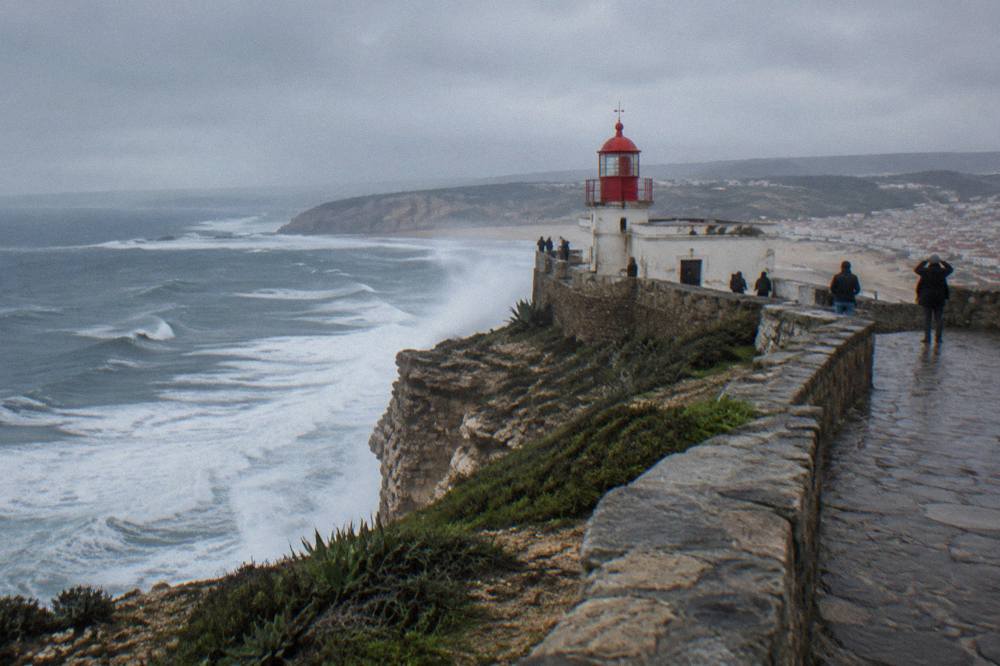
The mistake some visitors make is treating Nazaré as a full-day destination from Lisbon. It is not really built for that. The town divides into two parts: the beach-level fishing quarter, with its dried fish, its Café Sítio-bound funicular and its row of seafood restaurants, and the clifftop Sítio district, reached by the funicular or on foot up a steep path, where the lighthouse, the wave-viewing spot and the best panoramas live. Two to three unhurried hours covers both comfortably. Add lunch, a plate of barnacles or grilled fish, and you have filled half a day at most. Since you will be basing yourself in Lisbon for the trip, this guide to staying safe in Lisbon for American visitors covers the practical questions, from pickpockets to public transport.
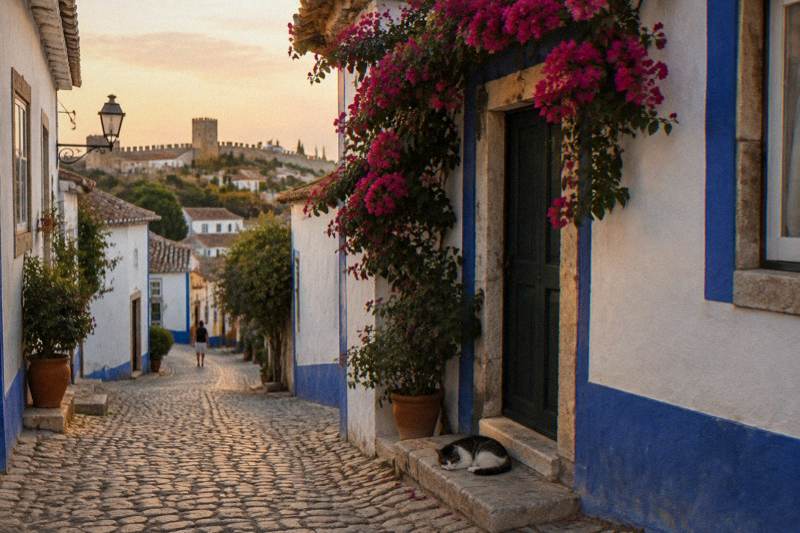
So the value question answers itself once you look at the map. Óbidos, the walled medieval town, lies about 84 to 87 km from Lisbon in the opposite-ish direction, roughly an hour's drive. Fátima, the pilgrimage sanctuary, is about 128 km from Lisbon, about 1.5 hours by road. Nazaré sits roughly between the two, and that geography is exactly why nearly every organized day trip from Lisbon bundles the three together. The Fátima, Óbidos and Nazaré day trip cluster exists because the route makes sense as a loop, not because any operator dreamed it up in a meeting room. Before you lock in that loop, a quick Óbidos timing guide helps you weigh a short photo stop against a slower wander.
For readers weighing the broader question of what Lisbon can release you to in a single day, the day trips from Lisbon overview lines up the coastal, pilgrimage and inland options side by side.
The three options above frame the real decision. The small-group day from Inside Lisbon, from €65 per person, keeps the group at eight. The comfortable van trip, from €48 per person, adds Batalha's monastery to the same three towns. And the long 13-hour Porto combination, from €82.49 per person, is a different animal entirely, one for travellers who accept a very full day in exchange for touching Portugal's second city. If that long combination tempts you, our breakdown of whether a Lisbon to Porto day trip is realistic weighs what a full day on the road actually buys you.
How Far Is Nazaré From Lisbon, Really?
Nazaré lies about 110 to 120 km from central Lisbon by road, and the typical drive takes about 1.5 to 2 hours depending on route and traffic. There is no direct train: rail connections require transfers and take roughly 3 hours or more each way, which is why nearly everyone arrives by tour van, rental car or intercity bus.
Those numbers deserve a little unpacking, because they shape the whole decision. The road distance figures come from route planners, and the honest phrasing is "about": about 110 to 120 km, about 90 to 120 minutes behind the wheel. The fast stretch is motorway most of the way, with tolls applying, and the final descent into Nazaré slows to town streets. In July and August, weekend traffic toward the coast can stretch the drive well past the typical range, and parking near the beach in high summer is its own small project.
Compare that with the neighbours on the same loop. Óbidos is the close one, about 84 to 87 km out, an hour or so by road, and like Nazaré it has no useful direct train; rail journeys there involve transfers and run past two hours. Fátima is about 128 km, about 1.5 hours by road, and its rail access is similarly indirect: the fastest connections involve a transfer at Seiça-Ourém and still take roughly an hour and twenty minutes once you factor the whole chain from Lisbon. Sintra and Cascais, by contrast, sit about 25 to 30 km away with direct urban trains every 20 minutes or so. The lesson is that the Atlantic coast north of Lisbon is van and car country.
Here is how the three towns on the classic loop compare on distance and drive time:
| Destination | Road distance from Lisbon | Typical drive time | Direct train? |
|---|---|---|---|
| Óbidos | about 84 to 87 km | about 1 hour | No, transfers needed |
| Nazaré | about 110 to 120 km | about 1.5 to 2 hours | No, transfers needed |
| Fátima | about 128 km | about 1.5 hours | No, transfers needed |
The rail column is the one people misjudge. Portugal's rail network is genuinely good on the Lisbon to Porto spine and on the Sintra and Cascais suburban lines, but the Silver Coast towns between them are served indirectly at best. For Nazaré you are looking at a rail-plus-bus or rail-transfer chain that takes roughly three hours or more in each direction. Six hours of transit for two hours on a clifftop is not a day trip; it is an endurance event.
That is the structural reason the organized day trip exists and why it dominates this route. A van covers the Fátima, Nazaré, Óbidos loop in about nine hours door to door, with a driver who already knows where the coaches park and how long the funicular queue runs. Independent travellers with a rental car can replicate the loop and will enjoy the freedom to linger in Óbidos over a ginjinha, but they should budget realistically: three towns, three parking puzzles, and a long drive home.
Which Tours Include Nazaré?
Four listings on this site's roster include Nazaré: the Inside Lisbon small-group day from €65 per person, a comfortable van trip with Batalha from €48 per person, a 10-hour full day with lunch from €31 per person, and the 13-hour Porto combination from €82.49 per person. All four are flagged with free cancellation, and the window differs per listing and is on the booking page.
The differences between them are bigger than the price spread suggests, so it is worth looking at each honestly rather than just sorting by cost.
The Fátima, Nazaré and Óbidos small-group day trip from Inside Lisbon is the one this site features for this question, and the reasoning is straightforward. It caps the group at eight, runs nine hours, and is rated 4.7 from 3,652 reviews, one of the deeper review pools on the whole roster. One recent guest review reads: "Wonderful experience. We got to see other parts of Portugal and see the landscape along the way. Long day but Fatima was amazing. Johnny was a great tour guide." That "long day" note is honest: nine hours with three stops means each stop is measured, roughly an hour to an hour and a half in Nazaré, which is enough for the Sítio, the lighthouse viewpoint and a coffee.
The budget end is the Fátima, Nazaré, Óbidos and Batalha full day, from €31 per person, ten hours in a larger group, rated 4.7 from 1,758 reviews, and notably the only one of the cheap tier with lunch listed as included. The van trip variant, from €48 per person, keeps the vehicle to eight passengers and adds the Batalha Monastery, rated 4.8 from 2,477 reviews. Between the two, the choice is comfort versus price: same three towns, same nine-to-ten-hour shape, different seat density.
At the far end sits the Porto, Nazaré and Óbidos one-day tour from World Experience, from €82.49 per person, thirteen hours, rated 4.7 from 4,389 reviews. It is a legitimate choice only for travellers who accept that the day will start early and end late, and who would rather see Porto badly than not at all. A gentler way to think through that specific trade-off is the separate Lisbon to Porto day trip tours comparison, which breaks down the timing in full.
| Tour | From (per person) | Duration | Group format | Rating and reviews |
|---|---|---|---|---|
| Full day with lunch (Fátima, Nazaré, Óbidos, Batalha) | €31 | 10 hours | Group tour | 4.7 from 1,758 |
| Comfortable van trip (Fátima, Batalha, Nazaré, Óbidos) | €48 | 9 hours | Max 8 | 4.8 from 2,477 |
| Inside Lisbon small-group day | €65 | 9 hours | Max 8 | 4.7 from 3,652 |
| Porto, Nazaré and Óbidos in one day | €82.49 | 13 hours | Group tour | 4.7 from 4,389 |
One pattern worth naming: none of these tours sells Nazaré alone, and that is not a gap in the market, it is the market telling you something. Operators build routes around drive-time economics, and a Nazaré-only day from Lisbon does not pay its way against the three-town loop. When the industry consensus and the geography agree, the geography usually wins.
Can You Get To Nazaré Without A Car?
Yes, but not comfortably by train. There is no direct rail service: the fastest connections require transfers and take roughly three hours or more each way. The realistic car-free options are an organized day trip van, an intercity bus, or accepting the transfer chain, and for a single day the tour van wins on time almost every time.
The train detail deserves precision because it surprises people. Lisbon's rail map makes the Silver Coast look reachable, and on some route planners a Lisbon to Nazaré journey appears with plausible-looking times. The catch is that every itinerary involves at least one transfer, typically pairing a rail leg toward Coimbra or Leiria territory with a road leg into Nazaré, and end to end you are looking at roughly three hours or more in each direction. The same indirect picture applies to Óbidos, with transfers and roughly 2 to 2.5 hours of travel, and to Fátima, whose nearest useful rail point is Seiça-Ourém on the connecting chain. If you want the full rail-versus-tour analysis for the region, the day trips from Lisbon by train guide covers which destinations genuinely work by rail and which do not.
Intercity buses run to Nazaré and are the honest budget option for independent travellers, though schedules thin out outside summer and you should check current times before committing. A rental car remains the flexible middle path: the drive is straightforward motorway with tolls, and having the car lets you set your own linger time in Óbidos, which is the town most likely to steal an extra hour from your plan.
What the car-free math rules out is the ambitious two-coast day. Trying to do Sintra in the morning and Nazaré in the afternoon by public transport does not work; the transfer chains alone would consume five to six hours. Pick one coast. On balance, for a visitor with one free day and no car, the nine-hour small-group van day is not a compromise, it is simply the correct instrument.
What Do You Actually See And Do In Nazaré?
Nazaré gives you two levels of town joined by a funicular: the beach quarter with fishing boats and seafood restaurants below, and the clifftop Sítio with its lighthouse, viewpoints and surf history above. Plan on two to three hours, plus lunch, with the Sítio viewpoint over Praia do Norte as the single non-negotiable stop.
The beach level is where the town's fishing identity is still visible rather than staged. Boats are hauled onto the sand, fish dries on racks in the older quarter, and the restaurants along the front serve whatever came in that morning. This is the place for a long lunch: grilled fish, percebes (goose barnacles, a local delicacy with a price to match), and a caldeirada if the kitchen makes one. Lunch is not filler on a Nazaré stop, it is a genuine part of the visit, which is worth remembering when comparing tours that include a meal against ones that leave you to find your own.
Above, the Sítio district is reached by the town funicular or by a steep walk, and it holds the rewards. The lighthouse with its surf museum tells the story of the giant waves and the records set just below at Praia do Norte. The viewpoint there, over the north beach and the headland, is the picture most people have in their heads when they decide to come. On a calm summer day the sea below looks almost tame, which is its own kind of interesting: the canyon that produces 20-metre winter waves is invisible, but the viewing gallery built for those days is not.
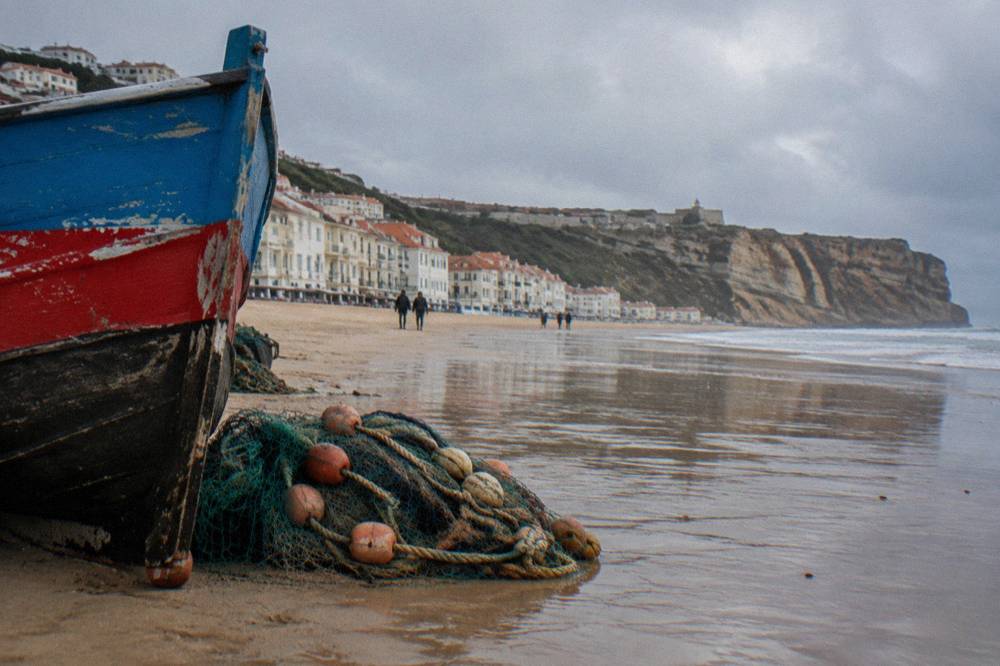
Two honest caveats. First, timing: if giant waves are the reason you are coming, they are a late-autumn and winter phenomenon, and a summer visit sees a family beach instead. The town is pleasant in both modes, but they are different experiences, and no tour can schedule the ocean. Second, Nazaré's charms are concentrated; there is no palace, no monastery, no walled lane network like the neighbours on the loop. Two to three hours is not a rushed version of Nazaré, it is Nazaré.
That is precisely why the loop works. Óbidos supplies the medieval walls and the cherry liqueur, Fátima supplies the scale and solemnity of one of the world's major pilgrimage sites, Batalha supplies Gothic architecture, and Nazaré supplies the Atlantic. No single one of them justifies the drive alone; the four together make one of the best-value day routes out of Lisbon. Visitors weighing the sanctuary stop specifically will find the is it worth going to Fátima question answered in its own piece.
Nazaré, Fátima And Óbidos In One Day: Does The Timing Work?
Yes, and it is the standard shape of the route. Every Nazaré tour on this roster runs 9 to 10 hours for the three-town loop, which in practice means about an hour to an hour and a half in Nazaré, a similar block in Óbidos, and the longest stop at Fátima. It is a full but workable day, with pickup and drop-off in Lisbon included on the van-based listings.
The internal rhythm matters more than the headline duration. A typical routing runs Lisbon to Óbidos first, about an hour out, while morning light suits the walled lanes; then north or across to Nazaré for a clifftop visit and lunch; then Fátima for the late-afternoon sanctuary period, when the pilgrimage crowds thin slightly; then the roughly 1.5-hour run back to Lisbon. Door to door that is nine hours with the margins the operators plan for, and the 10-hour versions simply buy more air into each stop or add Batalha.
Whether that pace suits you is a personal call, and the reviews are candid about it. The "long day but Fatima was amazing" phrasing in one guest review of the small-group trip is representative: nobody feels short-changed, but nobody pretends it is restful. If your travel style is two stops maximum and a sit-down lunch you choose yourself, the loop will chafe slightly, and a rental car with just Óbidos and Nazaré might fit better, trimming Fátima and its extra hour of driving.
For completeness, the wildcard: the Porto combination squeezes Óbidos and Nazaré into a day whose real destination is Porto, about 300 km and roughly three hours up the A1 by road, with direct Alfa Pendular trains running the spine in about 2 hours 40 minutes if you ever want to do Porto properly instead. As a Nazaré vehicle it is a sample, not a visit; as a Porto sampler with two bonus towns it has its fans, 4.7 from 4,389 reviews is a serious pool. Just go in with your eyes open about the thirteen hours.
When Is The Best Time Of Year For A Nazaré Day Trip?
For the famous waves, late autumn and winter, roughly November to February, when Praia do Norte produces its giant surf. For beach weather, July and August. For the best overall balance of comfortable travel and thinner crowds, the shoulder months of May, June, September and October, when the tour vans run the same routes with less competition for the viewpoints.
The wave season point deserves the emphasis because it inverts the usual tourist calendar. Most of Portugal's coastal towns are at their calmest and least interesting in January; Nazaré is at its most dramatic. When a big swell lines up with the canyon, the Sítio viewpoint fills with onlookers and the town's entire reason for fame is on display. The trade-off is weather risk: winter storms can also mean grey skies, wind and a colder wait at the clifftop, and the long-run Lisbon climate records show the November to January window carrying many times the monthly rainfall of June and July. Hedged properly: winter visits carry real rain risk, summer visits almost none.
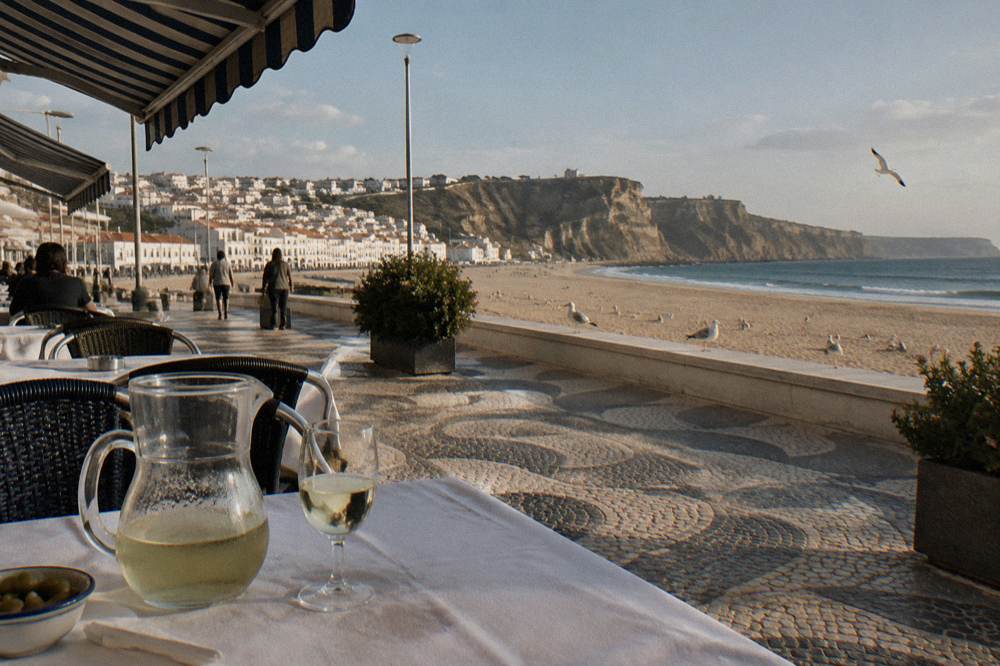
Summer brings the opposite trade. The beach is glorious, the fish restaurants are at full tilt, and the waves are modest surf at most. But the coast road traffic thickens, Nazaré's own population swells with domestic holidaymakers, and the 9-hour loop gets hotter, with the Fátima stretch offering little shade. The listing calendars for these tours flex with demand, and prices vary by date, so the "from" figures on any given day may sit above the floor in peak weeks.
The pragmatic answer for most first-time visitors is the shoulder seasons. May and June, and September and October, combine comfortable daytime highs with crowd levels well below the August peak, and the seafront still feels alive. June adds the Festas de Lisboa energy in the capital, peaking around 12 to 13 June, which can be a bonus or a booking headache depending on your dates. Whenever you go, the practical advice is the same: check the live listing for the day you actually want, because the operator's listing carries the current departure calendar and the cancellation terms for that specific date.
For travellers planning around the whole year rather than one route, the site's broader best time to visit Lisbon guide puts these month-by-month trade-offs in one place, and Lisbon Portugal Tours keeps the full roster of coastal and inland days alongside it. If your window is November, note that Web Summit lands in Lisbon in that month and city accommodation tightens around it, which matters less for the coast itself but more for where you sleep the night before a 9-hour tour day.
Common Questions About Nazaré Day Trips
Is Nazaré Worth A Day Trip?
Yes, as one stop on a multi-town day trip from Lisbon. On its own it is a long drive, about 110 to 120 km with no direct train, for two to three hours of sightseeing. Combined with Óbidos and Fátima on a 9 to 10 hour organized day, from €31 to €80 per person depending on the listing, it becomes one of the best-value routes out of the capital.
How Far Is Nazaré From Lisbon?
About 110 to 120 km by road, with a typical drive time of about 1.5 to 2 hours each way, tolls applying on the motorway stretches. For context, Óbidos is about 84 to 87 km and Fátima about 128 km from Lisbon, which is why the three towns are usually toured together.
Can You Take A Train From Lisbon To Nazaré?
Not directly. Rail journeys require transfers and take roughly three hours or more each way, so a same-day return by train is impractical. Car-free visitors are better served by an organized day trip van or an intercity bus.
How Much Time Do You Need In Nazaré?
About two to three hours plus lunch. That covers the clifftop Sítio, the lighthouse and the Praia do Norte viewpoint, plus the beach-level fishing quarter. The town funicular or a steep footpath links the two levels.
When Can You See The Giant Waves At Nazaré?
The giant surf at Praia do Norte is a late autumn and winter phenomenon, roughly November to February. In summer the beach is calm and family-oriented. No tour or operator can promise wave conditions on any given date.
Do Nazaré Day Trips Include Óbidos And Fátima?
On this roster, yes. Every Nazaré day trip also covers Óbidos and Fátima, and some add Batalha. Durations run 9 to 10 hours for the standard loop, or 13 hours for the Porto combination. All the listings are flagged with free cancellation, and the window differs per listing and is stated on the booking page.