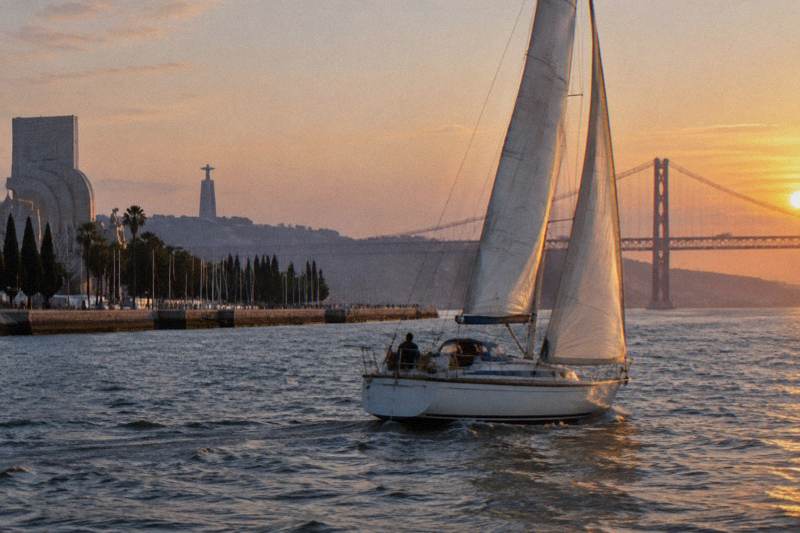
What Are The Best Places To Watch The Sunset In Lisbon?
Where to watch the Lisbon sunset, from the Alfama hillside miradouros to the Tagus river itself, with the sunset cruises and viewpoints compared on price, duration and format.
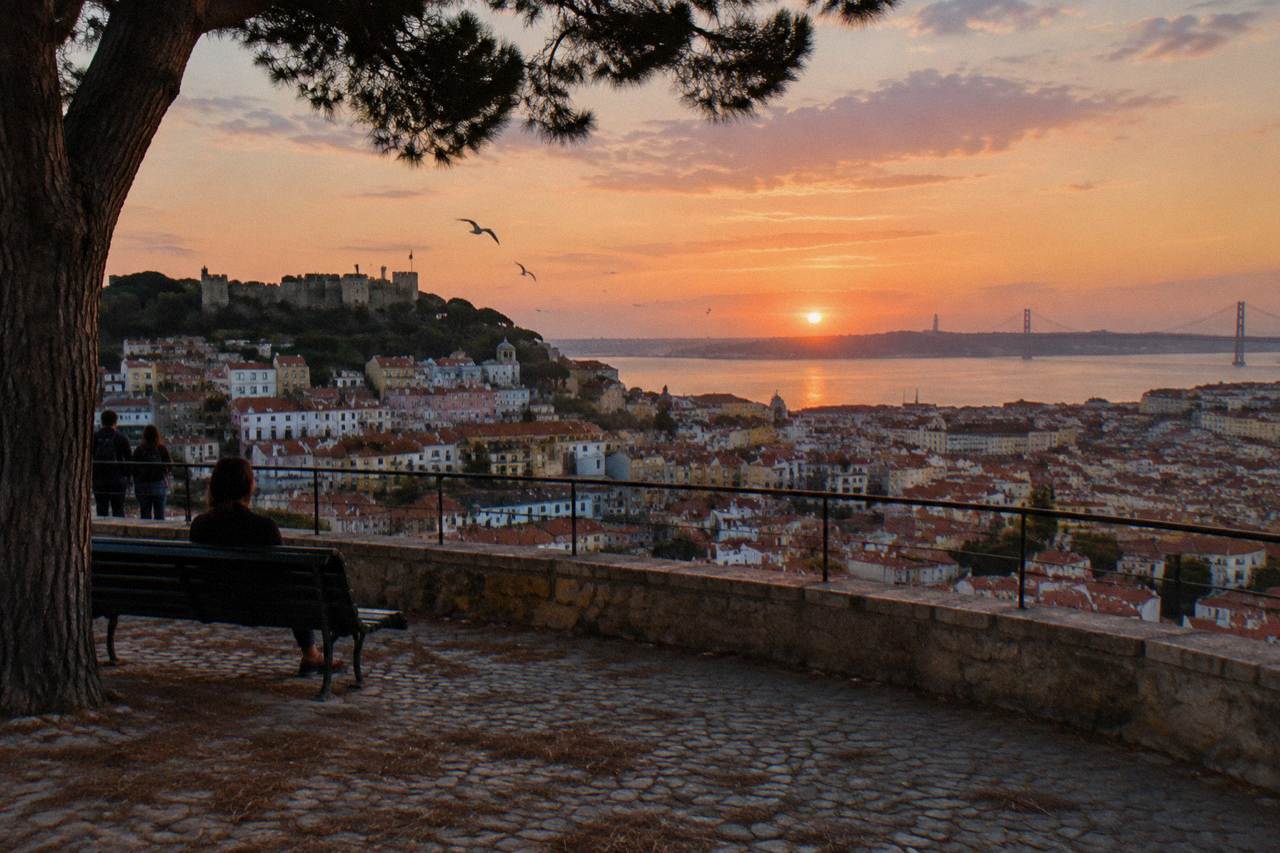
Lisbon faces west over the Tagus estuary, and the Atlantic light that made the city's painters famous still does the same job every evening: it turns the river into a sheet of copper, backlights the hills, and sends everyone in the city scrambling for a viewpoint. The question visitors actually ask is not whether the sunset will be good, it is where to stand when it happens, and whether it is better to be up on a hill or out on the water (see Sunset Cruise Explained). The short answer is that both work, and the choice comes down to how much walking you want to do and whether you would rather hold a glass of wine on a boat or lean on a railing above the rooftops.
The city's miradouros, the terraced viewpoints strung along its ridges, are the classic answer and they cost nothing. The river is the other answer, and it is the one the tour roster backs with real products: a two-hour Tagus sunset cruise with drinks from €33 per person, a sunset sail with wine from €55, and a catamaran run with a welcome drink from €28. Between the hills and the boats, most travelers end up doing one of each on a longer stay.
The best seat depends on the season, your legs and your budget, so the sections below break the decision into pieces: the viewpoints, the river cruises, the neighbourhoods that work after dark, and the practical timing questions that decide whether you get the view or a queue. Some spots earn their reputation, others fall short once the crowds arrive, and the sections here cover both kinds.
What Are The Best Places To Watch The Sunset In Lisbon?
The best places fall into three groups: the hilltop miradouros above Graça, Alfama and Bairro Alto, the riverfront promenade from Belém to Cais do Sodré, and the water itself on a Tagus sunset cruise. The viewpoints are free and crowded, the riverfront is relaxed, and the cruise gives you the whole skyline lit up from the middle of the river, from €28 per person.
That is the honest ranking most locals would give, with one caveat: the best viewpoint changes with the season. Lisbon sits at the mouth of a wide estuary, and the sun sets over the river's western shoulder, so from the hills you watch the light travel across the water toward the bridge. In summer the evenings are long and warm and the miradouros fill like stadium terraces; in winter the light goes early, the terraces empty fast, and a boat with a drink inside starts looking like the smarter plan.
The miradouros themselves are general knowledge worth naming. The terrace below the Graça church looks straight over the castle to the river. The Senhora do Monte viewpoint a little higher up is the one photographers favour, because it catches both the castle and the pan across to the bridge. In Alfama, the Portas do Sol and Santa Luzia terraces give you the old rooftops stacked in the foreground, which is the postcard view. On the other side of the centre, São Pedro de Alcântara looks down the length of Avenida da Liberdade with the castle opposite, and the Carmo terrace beside the ruined convent is the easiest one to reach from the Baixa streets. All of them are free, all of them have a kiosk or a bar nearby, and none of them needs a ticket.
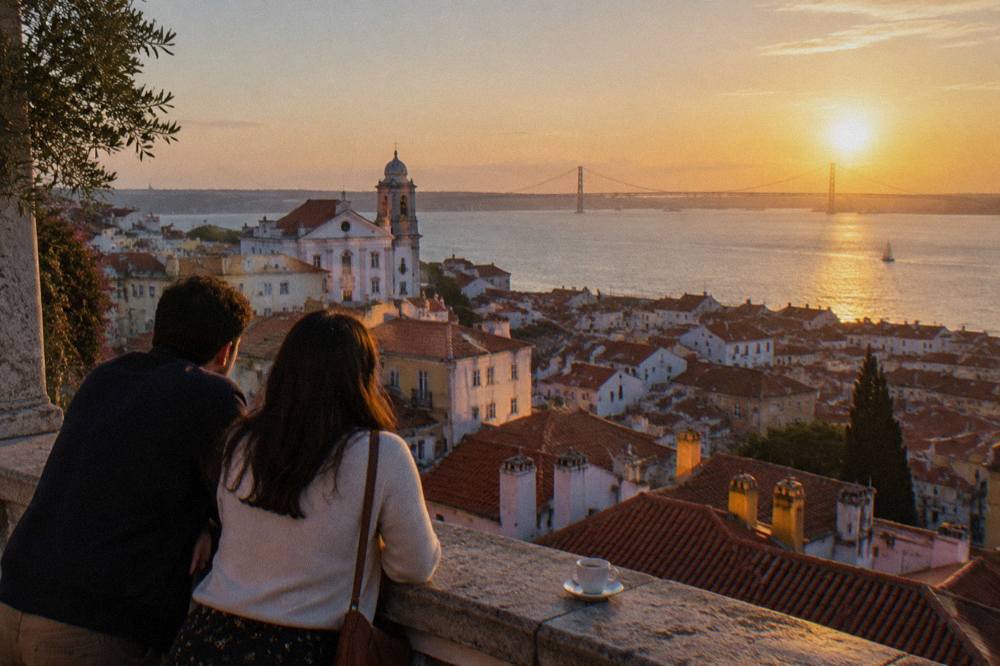
What the viewpoints do not give you is the city in one frame. The skyline is too close when you are standing inside it, and once the sun drops, the hills go dark quickly and the walk down through Alfama's lanes is steep and cobbled. That is the moment the river option earns its money. A boat puts the entire lit hillside on one side of you, the bridge on the other, and someone else in charge of the route home.
If you are planning around formats rather than spots, the sunset cruises and boat tours cluster page compares every river product on the roster side by side, which is a faster way to decide than reading listings one at a time.
Is A Boat Actually The Best Sunset Spot In Lisbon?
For a single memorable evening, the river makes a strong claim to being the best seat in Lisbon, because it is the only place the whole city appears in one view: the Alfama hillside, the cathedral, the bridge and the Christ statue across the water. The cruises run about two hours, from €28 to €60 per person depending on the boat and what is poured.
The roster backs this with a spread of formats and prices that map neatly onto budgets. The catamaran sunset tour with one welcome drink is the entry point, from €28 per person for ninety minutes, rated 4.7 from 3,565 reviews, with pickup flagged on the listing. The Tagus River sunset cruise with drinks sits in the middle at from €33 per person for two hours, capped at ten passengers per boat, rated 4.9 from 449 reviews. Above it, the sunset sail with wine from RENT A BOAT runs two hours from €55 per person with a maximum of 12 guests, rated 4.9 from 2,921 reviews, and the listing includes a drink service. And at the top end, the luxury sailing yacht version from Lisbon By Boat is from €60 per person for two hours with two drinks included, max 14 guests, rated 4.9 from 1,185 reviews. Once you've picked a price bracket, this walkthrough of the cruise itself, from boarding to the last drink fills in the details the listings leave out.
| Cruise | Price from | Duration | Group cap | Rating | Drinks |
|---|---|---|---|---|---|
| Catamaran sunset, welcome drink | €28 pp | 1.5 hours | Group tour | 4.7 from 3,565 reviews | 1 welcome drink |
| Tagus sunset cruise with drinks | €33 pp | 2 hours | Max 10 | 4.9 from 449 reviews | Drinks listed |
| Sunset and wine sailing tour | €55 pp | 2 hours | Max 12 | 4.9 from 2,921 reviews | Wine, food listed |
| Luxury yacht sunset, 2 drinks | €60 pp | 2 hours | Max 14 | 4.9 from 1,185 reviews | 2 drinks |
| Traditional boats, white wine | €35 pp | 2 hours | Group tour | 4.7 from 2,261 reviews | White wine |
| Sunset or night sailboat cruise | €45 pp | 2 hours | Group tour | 4.9 from 314 reviews | Not listed |
The differences that matter are not really the price gaps, which are small, but the passenger counts and the boat type. A catamaran with a big group is a party deck: stable, social, easy to board. A sailboat capped at ten or twelve is quieter and closer to the water, and on the sailing tours the engine often cuts for part of the run, which changes the whole feel of the evening. A traditional wooden boat, the ones with the old river lines, is somewhere between the two and the white wine comes as standard.
No operator can promise you the sky. A cruise gives you the position and the frame, not the colour, and a cloudy October evening still beats an hour on a crowded terrace simply because you are moving through the view instead of staring at one slice of it. The listing for the yacht version carries a review that captures what people actually take away from these trips: "Such a highlight of our trip to Lisbon. The guide gave us such wonderful information on the sights we experienced during the journey. The actual sunset was magnificent!!"
The featured Tagus cruise itself is the format most first-time visitors settle on, and it is the one this site points to most often for the decision: two hours, a small boat, a drink in hand and the entire western sky open ahead of you. You can check the Tagus sunset cruise listing for live times and departure points, and free cancellation is flagged on the listing, though the window varies per listing and is shown on the booking page.
Between the viewpoint plan and the boat plan there is a practical difference worth naming: the viewpoints cost nothing but cost you effort and timing, while the boat costs money and removes both. On a short city break of two or three nights, the cruise is the more reliable of the two, because it does not depend on you finding the right terrace at the right minute.
Which Miradouro Should You Pick If You Stay On Land?
Pick Graça's Senhora do Monte for the widest frame, Portas do Sol for the classic Alfama rooftops, and São Pedro de Alcântara if you want the easiest walk from the centre. Arrive thirty to forty-five minutes before the posted sunset time, because the best light comes before the sun touches the horizon, not after.
That pre-sunset window is the part most visitors get wrong. The terraces fill in the last twenty minutes and empty the moment the sun drops, but the deep orange on the buildings comes earlier, and the city's lights click on ten or fifteen minutes after the horizon swallows the disc. Staying past the drop is how you get the skyline lit, which is the better photograph anyway.
Getting up the hills deserves a note, because Lisbon's famous lifts are not currently all running. The Graça funicular runs again, but the Gloria, Bica and Lavra funiculars and the Santa Justa lift are closed to passengers, so check Carris for the current status before you plan a route around them. In practice this means walking up, taking a bus, or riding the 28 tram partway and walking the rest. The upside of the closures is that the upper terraces are slightly less crushed than they were in peak years.
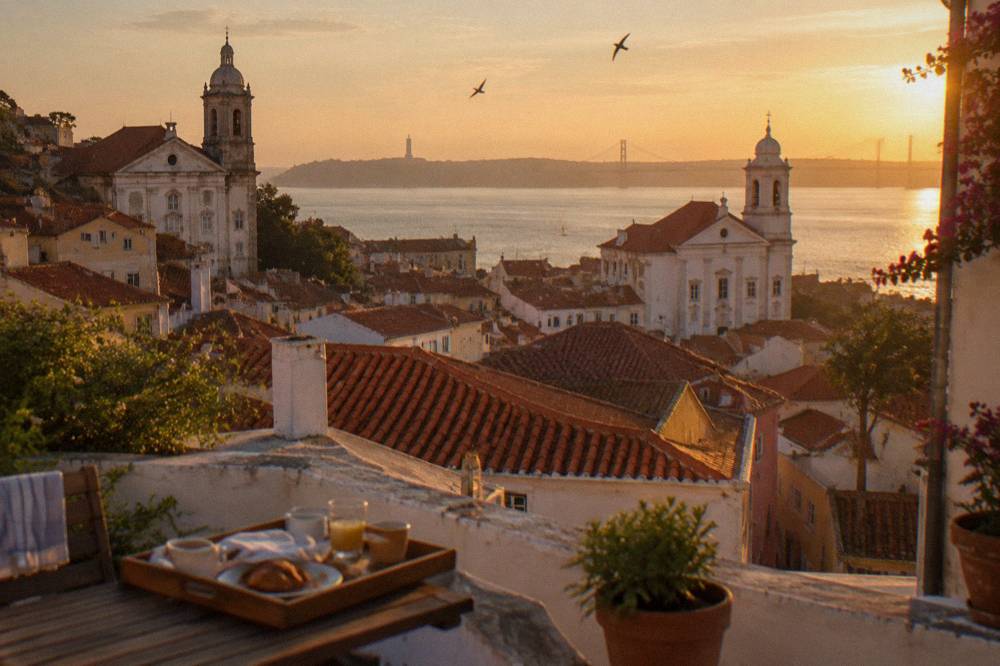
A land-only sunset evening pairs naturally with a walk, and the old-quarters walk format is the standard way to end at a viewpoint with a guide who knows which terrace is quiet on which night. If you prefer to wander unguided, the self-guided walking tour of Lisbon lays out a route that climbs through Mouraria to the Graça ridge, which is the exact direction the evening light travels. Tip-based free walking tours, which run on a contribution model, are another low-commitment way to learn the hill lanes before you do the sunset climb yourself.
For timing across the year, the sun sets late in Portuguese summer, past eight in the evening in July and August, and before half past five in December, and the day-to-day times are published on the timeanddate.com Lisbon page. Sunset-drink culture adjusts: in summer the terraces run all evening, in winter you take the sunset at five and dinner after, and the cruise departures shift earlier to match.
What Does A Sunset Cruise Actually Feel Like?
A typical cruise leaves the docks an hour or so before sunset, motors downriver past the square and the monuments, cuts the engine or slows mid-river for the sunset itself, and returns in the dark with the city lit on both banks. Almost every listing runs the same skeleton; what changes is the boat, the crowd size and what is in the glass.
The sail version is the one that changes most in character. The sunset and wine sailing tour from RENT A BOAT is two hours, from €55 per person, capped at twelve guests, with food and a drink service listed and a 4.9 rating from 2,921 reviews, and being on a sailing boat rather than a launch changes the sensory side of the trip: less engine noise, more tilt, the smell of the river rather than diesel. The reviews on that listing read like a different product from the big-group cruises even though the route is the same water.
The mid-range sailboat option is the sunset or night cruise from Lisbon Sail, two hours from €45 per person, rated 4.9 from 314 reviews, which gives you the smaller-boat feel without the wine service, and there is also a traditional-boat version with white wine from Nosso Tejo, two hours from €35 per person, rated 4.7 from 2,261 reviews. The traditional boats are the flat, old river craft with the canvas awnings, and they sit low enough that the water is close enough to touch, which some people love and some find less reassuring with a glass in hand.
Practical notes that recur across guest reviews: dress one layer warmer than the street suggests, because the river wind is real even in summer; wear flat shoes for boarding; and know that the return leg is in the dark, which is when the cruise earns its second act. The city does not go dark, it switches on, and the lit hillside from mid-river at night is arguably better than the sunset that preceded it.
One honest warning: these are working river trips, not private charters, and the lower-priced options are popular. Booking a day or two ahead in the warmer months is standard advice, and every listing in the table above is flagged with free cancellation, though the window differs per listing and the exact terms sit on the booking page rather than in any article.
What Can You Do After The Sun Goes Down?
The strongest post-sunset plan keeps you moving downhill: from Graça into Alfama for dinner and fado, from Bairro Alto into Cais do Sodré for bars, or from Belém along the riverfront to Pastéis de Belém, which stays open until late evening. The city's nightlife does not start at sunset anyway, it starts two hours after.
Alfama is the classic route. You watch from the Portas do Sol terrace, then descend into the lanes for grilled fish and a fado show, and the roster's fado listings are short enough to fit a post-sunset slot: the authentic fado show with wine is fifty minutes from €15 per person, rated 4.8 from 7,184 reviews, with multiple evening times that pair neatly with an earlier cruise or terrace. The Museu do Fado sits in the same neighbourhood and its normal ticket is €5, closed Mondays, if you want the history before the singing.
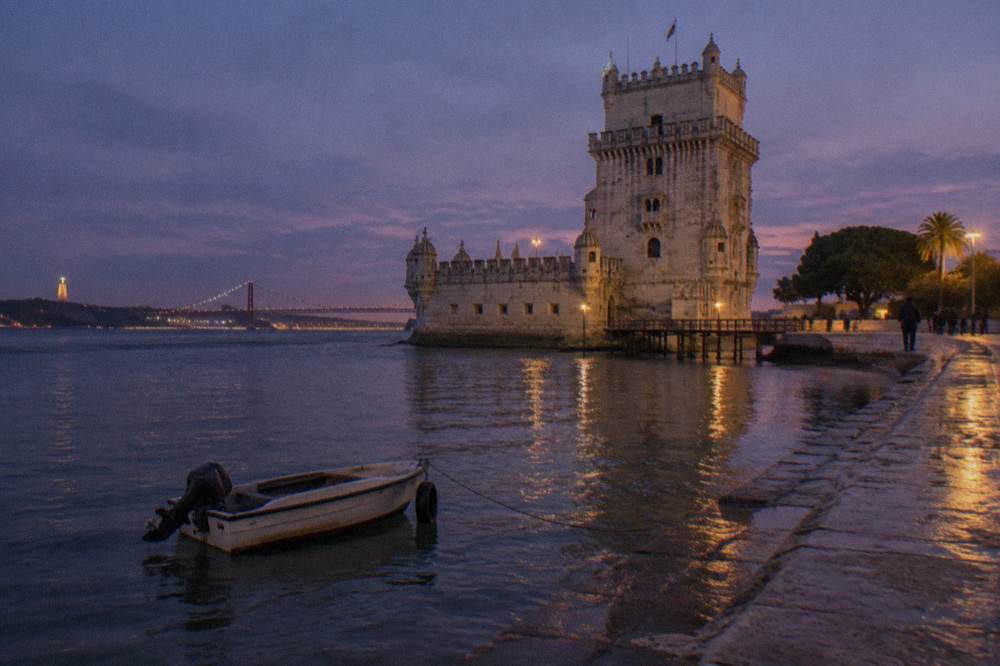
Belém works the other way around, better for a sunset you walk to. The riverfront monuments face the water, and the Padrão dos Descobrimentos is open into the early evening most of the year, adult full ticket €10, so you can climb it in the last light and come down for a pastel, at about €1.50 each, before the walk back. The MAAT waterfront museum is open into the evening on most days, €16 for non-residents, though its Monday closure means checking the calendar first.
The evening-eating question gets its own treatment in the city coverage, and if you are sequencing a whole trip rather than one night, the how many days are enough in Lisbon piece helps you decide whether a sunset night can absorb both a terrace and a show, or whether you should split them across evenings.
Hills Or Water: Which Should You Choose?
Choose the hills if your evening is about wandering, wine at a kiosk and not spending money, and choose the water if this is a one-night event you want to be certain about. The ideal short trip does both: a terrace one evening, a cruise the next, because they answer different questions, one puts you inside the city, the other puts the city in front of you.
Price is rarely the decider, which surprises people. The cheapest cruise on the roster, the catamaran at from €28 per person, costs about the same as two rounds of drinks on a terrace once you count the kiosk markup, and the small-boat cruise at from €33 is less than most sit-down dinners in the centre. The real cost of the viewpoint plan is timing risk: arrive late, or pick a terrace walled by trees, and the evening is gone.
Crowds are the honest differentiator. The three famous terraces in Alfama and Graça are standing-room in July and August, and nobody is wrong to be there, but a boat with ten passengers gives each person a railing. Reviews on the small-cruise listings mention the space more than anything else, and the guest review on the featured Tagus cruise's family of listings repeatedly returns to the same theme: seeing the city laid out without anyone's head in the way.
Who you are travelling with also tilts it. Families with younger children do better on the catamaran, where movement and a drink break the wait. Couples tend to book the sail or yacht versions, and the luxury yacht listing at from €60 per person with two drinks included, rated 4.9 from 1,185 reviews, is the one that shows up in anniversary-trip reviews. Solo travellers and small friend groups sit happily in the middle products, which is where the featured Tagus cruise lives, and where Lisbon Portugal Tours places it in the sunset lineup.
Common Questions About Watching The Sunset In Lisbon
What Are The Best Places To Watch The Sunset In Lisbon?
The free hilltop miradouros at Graça, Portas do Sol and São Pedro de Alcântara, the riverfront at Belém, and the Tagus itself on a sunset cruise. The terraces put you inside the city and the cruise puts the whole skyline in one frame; the roster's river options run from €28 to €60 per person for about two hours.
Is a sunset cruise in Lisbon worth the money?
For a single planned evening, most travelers find it is, because it removes the timing risk of the viewpoints and returns you in the dark with the city lit on both banks. Entry prices start at from €28 per person for the catamaran, and the small-group Tagus cruise with drinks is from €33, rated 4.9 from 449 reviews.
What time should I get to a miradouro for sunset?
Thirty to forty-five minutes before the posted sunset time. The best light arrives before the sun drops, and the city's lights switch on ten to fifteen minutes after, so staying past the horizon gives you the second, often better, photograph. Sunset times shift from past 20:00 in summer to before 17:30 in December.
Can I take the funicular up to the viewpoints?
Only partly. The Graça funicular runs again, but the Gloria, Bica and Lavra funiculars and the Santa Justa lift are closed to passengers, so check Carris for the current status and plan on a walk, a bus, or the tram for part of the climb.
Is it cold on the boat at sunset?
Usually yes, by the second half. The river wind drops the temperature noticeably even in summer, so bring one more layer than the street suggests, plus flat shoes for boarding. The return leg is in the dark.
Do the sunset cruises include drinks?
It varies by listing and the details sit on each booking page: the luxury yacht version includes two drinks, the traditional boat pours white wine, the sailing tour lists wine and food, and the entry catamaran includes one welcome drink. Free cancellation is flagged on the listings, but the window differs per listing.