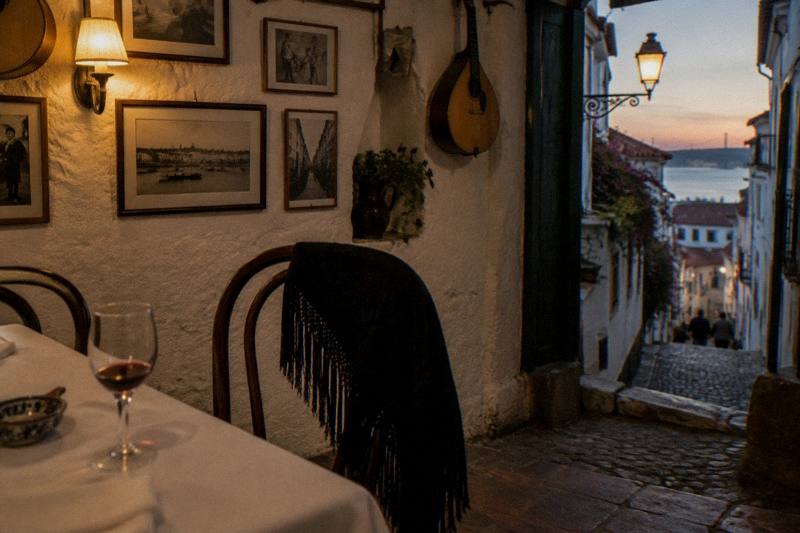
What To Wear To A Fado Show?
No fado listing in Lisbon sets a dress code, and this guide explains what actually matters: shoes for cobbles, layers for cool evenings, and what differs between a 50-minute show and a dinner performance.
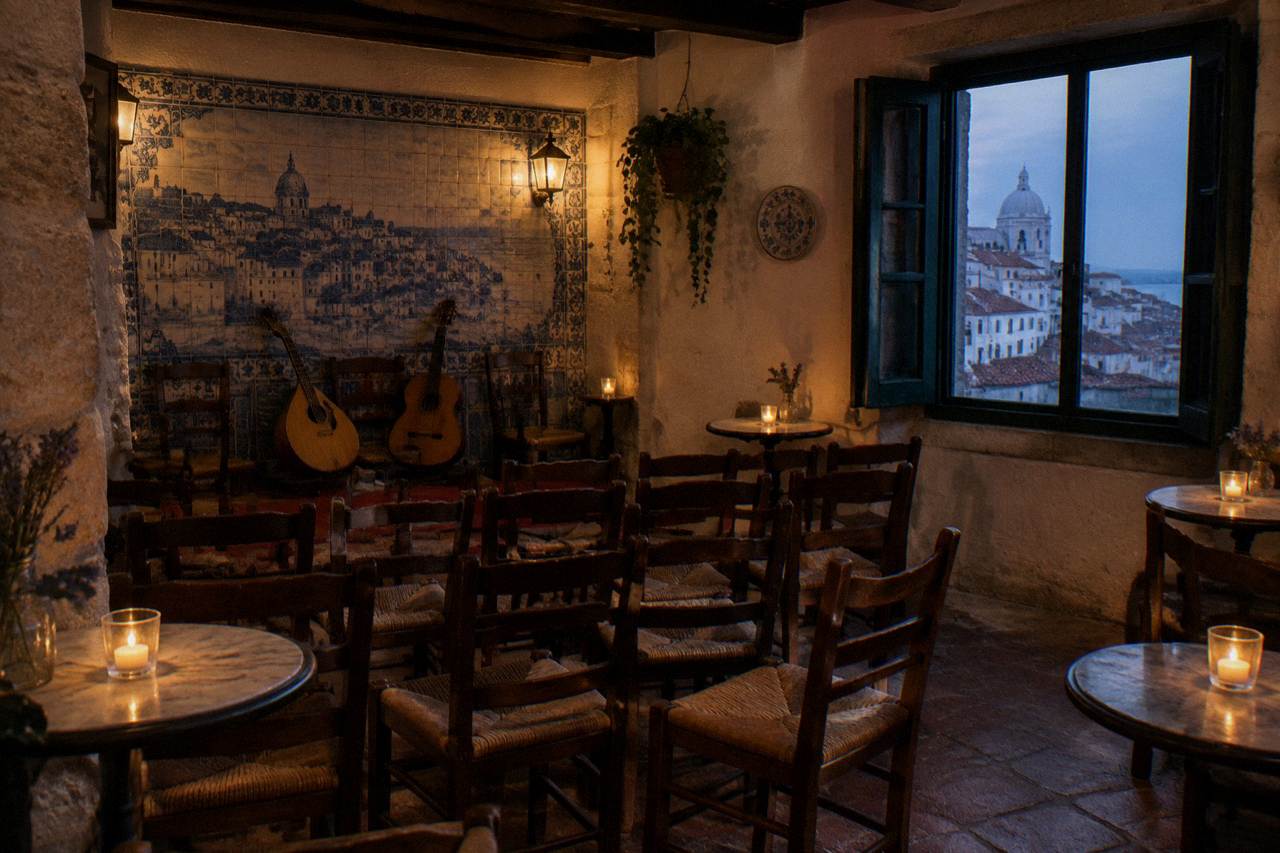
The question sounds small and it is, in the best way. Fado is a quiet room, two singers, a twelve-string guitarra and a rule of silence while the song runs, and none of the fado products on this site's roster, from the 50-minute shows to the full dinner performances, publishes a dress code. We checked each listing: not one tells you what to wear. That absence is itself the answer, because Lisbon's fado houses have always mixed locals in work clothes with visitors in holiday shirts, and the format has never depended on anyone dressing up.
What your outfit does depend on is everything around the show. Alfama and Bairro Alto are hills of polished stone cobbles that turn slick after rain. Evenings by the Tagus run cooler than the afternoon felt. A 50-minute standing-or-sitting show treats your clothes very differently from a two-hour dinner performance at a candlelit table. This guide walks through each of those decisions, using the actual fado listings in the fado shows collection as the practical anchor, so the answer is grounded in real products rather than generic advice.
What To Wear To A Fado Show?
No fado venue or tour listing in Lisbon publishes a dress code, so there is no required outfit and nothing you wear will be turned away. In practice, neat-casual is the local norm: trousers or a dress, a light layer for air conditioning and evening cool, and shoes that grip stone cobbles. Dress for the walk and the table, not for a door policy that does not exist.
That bolded answer deserves a little unpacking, because "neat-casual" means different things in a 45-seat Alfama tasca and a purpose-built dinner venue. The smaller houses are genuinely informal: tables are close, the lights go down, and the audience is a mix of neighbourhood regulars and travellers who walked up from the tram stop. Bigger commercial venues attract more visitors, and the crowd skews slightly smarter, but even there you will see jeans everywhere and nobody blinking at them. The 50-minute show with wine from €15 is a typical example of the format: it is short, it is central, and its 4.8 rating across 7,184 reviews comes from an audience that arrived in everything from hiking boots to linen.
One guest review on that listing captures the mood of the short-show format well: "This was a lovely introduction to fado! If you're unsure if you'll like the music, this is a wonderful alternative to some of the longer fado shows available, and the multiple times and locations make it easy to fit into your trip. Highly recommend!" Notice what the review talks about: fitting the show into a trip, not dressing for it. That is the correct mental model. You are choosing an evening activity, not a gala.
The practical exception is the dinner show. If your ticket includes a seated Portuguese dinner, you will be at that table for roughly two hours, sometimes in a room with air conditioning set for a full house. Layers solve both problems: a jumper or light jacket you can tie around your waist on the walk and put on when the room cools. If you are still deciding between the formats, the piece on how long a fado show runs breaks down the time commitment, since duration is the single biggest factor in how comfortable you need to be.
Do Fado Venues In Lisbon Have A Dress Code?
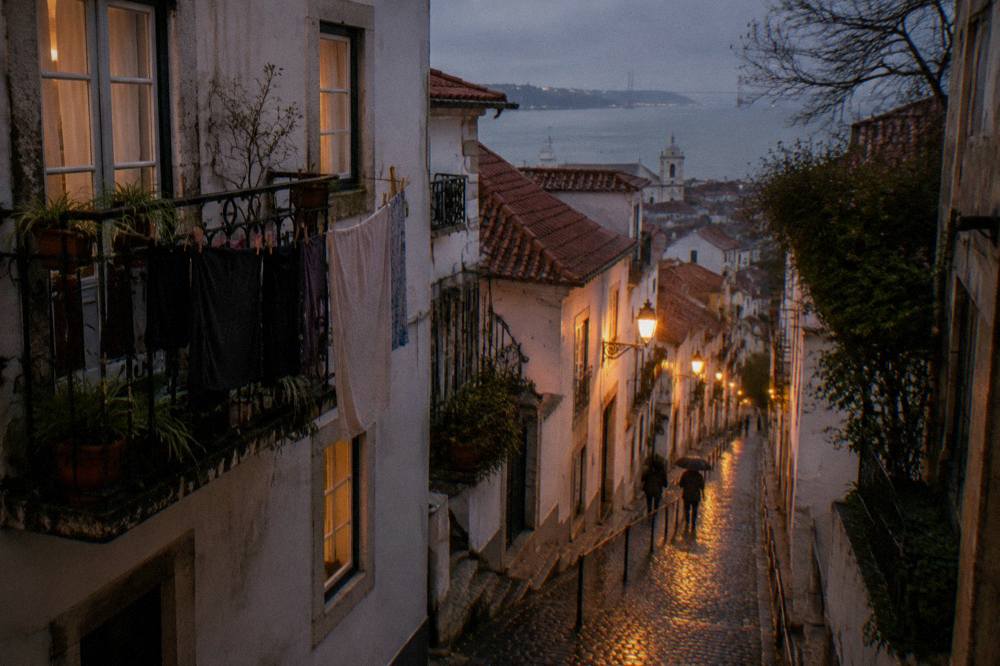
No. We reviewed every fado product in the site's roster and none states a dress code, a jacket requirement or a footwear rule. Fado houses in Alfama and Bairro Alto are working neighbourhood venues where locals and visitors share the same room, and the tradition itself, recognised by UNESCO in 2011, grew out of ordinary evening life rather than formal performance halls. Since dress is a non-issue, the bigger question becomes where to sit, and our guide to the neighbourhood spots where locals actually hear fado sorts the tascas of Alfama from the professional houses of Bairro Alto.
That history explains the informality better than any policy page could. Fado was added to UNESCO's Representative List of the Intangible Cultural Heritage of Humanity in 2011, but the songs predate that by more than a century, and they were sung in taverns, on docks and in stairway courtyards long before anyone sold a ticket. The venues that host tonight's shows are often the same small rooms, or rooms built to feel like them: low ceilings, candles, posters of Amália Rodrigues, a gap between tables where the singers stand. Clothes are simply not part of the contract between performer and audience. Silence during the song is. If you want the deeper background before booking, the article on whether a fado show is worth attending covers the etiquette that actually matters, which is mostly about when to talk and when not to.
There is one nuance worth naming. "No dress code" does not mean "no context". A venue that pours you a glass of wine and seats you for dinner, like the fado and Portuguese dinner experience from €50 with a 4.6 rating across 2,207 reviews, attracts a slightly more put-together crowd than a 50-minute stop-in show, simply because dinner is an occasion. You will not be out of place in clean trainers, but you may feel more at home in something you would wear to a relaxed restaurant at home. The table below sums up how the main formats differ in feel, so you can calibrate without overthinking it.
| Format | Typical duration | Crowd feel | What most people wear |
|---|---|---|---|
| Short show with a drink | About 50 minutes | Mixed, casual | Jeans, trainers, light layers |
| Short show with port wine | About 50 minutes | Mixed, casual, often older | Smart-casual, comfortable shoes |
| Alfama walk plus dinner and fado | About 4 hours | Visitors, relaxed touring clothes | What you wore all day, plus a layer |
| Seated dinner show | About 2 hours | Smart-casual, occasion feel | Trousers, dresses, a jumper or jacket |
Should You Dress Up For The Occasion?
Dressing up is allowed, and some people enjoy it: a fado night is one of the few Lisbon evenings that rewards a collared shirt or a dress, and candlelight is forgiving to everyone. The honest framing is that you dress up for yourself, not for the room. Nothing on any listing, from the 50-minute port-and-fado show at 4.7 across 5,709 reviews to the seated dinner performances, will treat you differently based on your outfit. If you want the practical answer in one line: aim for "nice restaurant at home", and you will be neither the most nor the least dressed person present.
Ready To Book A Fado Evening?
The listings above cover the three formats this article keeps returning to: the seated dinner show, the 50-minute introduction with wine, and the traditional port-and-fado performance. Each listing is flagged with free cancellation, though the window varies per listing, so check the booking page for the exact terms before you commit.
What Shoes Should You Wear To A Fado Show In Alfama?
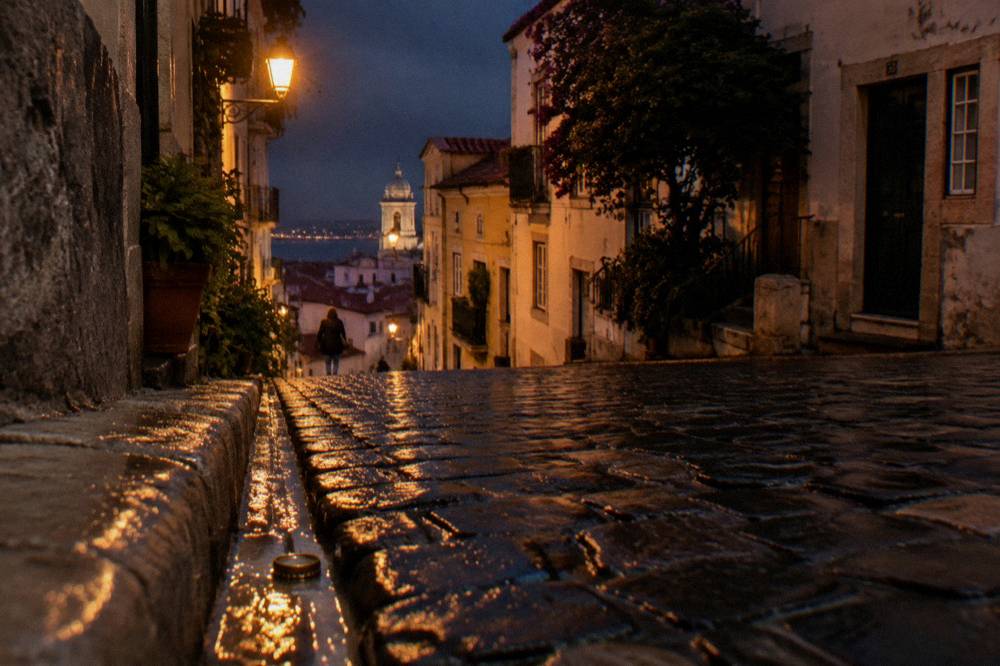
Wear closed shoes with grip. Alfama's lanes are worn limestone cobbles, polished by decades of feet and slick when wet, and most fado houses sit at the top or halfway up a hill you will climb on foot. Trainers, ankle boots or leather shoes with a real sole all work; smooth-soled dress shoes, flip-flops and brand-new heels are the three choices guests most often regret.
The geography is the whole argument. Alfama is a warren of alleys and staircases that grew up as a fishing quarter on the hillside, and the venues sit inside it, which means your route to the door involves inclines, uneven setts and steps without railings. The same applies to Bairro Alto, where the traditional fado and port wine show from €14 is held: the neighbourhood climbs steeply from the Baixa side, and after the show you walk back down it in the dark. Add rain, which falls regularly through the Lisbon winter and shoulder months, and a slick sole becomes a genuine hazard rather than a comfort issue.
Heels deserve a direct word because the question comes up constantly. A block heel under about 4 cm on a cobble-tested boot is manageable for many people. A stiletto is not: the setts in Alfama have gaps wide enough to swallow a thin heel, and catching one mid-step in a crowd after the show is how evenings end early. If heels are part of your plan, change into them at the venue where possible, or pick a show in a flatter district. The historic centre around the Baixa grid is flat by comparison, and several of the short 50-minute shows are hosted in venues you can reach without a climb.
Public transport to the venues shapes footwear too. The on-board tram ticket costs 3.30 EUR, and if you ride the historic tram up towards Alfama you will be standing in a moving, crowded wooden car before you walk the last stretch on foot. Grip matters there as much as on the cobbles. Note also that the Gloria, Bica and Lavra funiculars and the Santa Justa lift are closed to passengers, while the Graca funicular runs again, so plan on walking or the tram rather than counting on the historic lifts to carry you uphill.
What Should Women Wear To A Fado Show?
A dress, skirt or smart trousers all work equally well, paired with a light layer and flat or low block shoes for the cobbles. In summer, a midi dress or linen trousers with a wrap handles both the warm walk and the air-conditioned room; in winter, jeans or dark trousers with a coat you can check or keep on your chair are the standard choice.
The layer advice is not filler, it is the single most useful thing in this section. Fado rooms are small and deliberately dim, and they swing between two states: warm and stuffy when full, and cool once the door opens and the crowd thins after midnight shows. A wrap, cardigan or light jacket that fits over a summer dress costs you nothing to carry and solves both. In the cooler months, the same logic scales up: typical December lows in Lisbon sit around 8 to 9 degrees C, warm enough in the sun to fool you into leaving the coat, then sharply cold on a shaded hill after sunset. Bring the coat.
Colour is a non-issue. Lisbon's evening palette is relaxed, and while black is common in the fado houses, partly through association with the shawl imagery of the traditional fadista, nobody expects visitors to echo it. If you enjoy the reference, a dark dress or a pashmina nods to the tradition of the black shawl, the xale, that the female singers wear, and it doubles as your layer for the walk home. That is the one place where outfit and tradition genuinely meet, and it is a nice touch rather than a rule.
One practical note for the dinner formats: choose something you can sit in comfortably for two hours at a close table. The seated fado and Portuguese dinner experience runs about 2 hours with a full meal service, and the 4-hour version that combines an Alfama tour with dinner and live fado asks even more of your outfit. Anything tight at the waist or structurally formal will fight you by the second course. For a longer take on the timing question, the guide to fado show lengths sets out what each format asks of your evening.
The short introduction format keeps things even simpler. The 50-minute authentic show with wine, from €15, sits or stands you in a compact room for under an hour, and its 4.8 rating across 7,184 reviews reflects how easy it is to slot into an evening that started somewhere else entirely. Whatever you wore to dinner beforehand is almost certainly fine.
What Should Men Wear To A Fado Show?
Smart-casual with an emphasis on comfort: chinos or dark jeans, a shirt or polo, and shoes with a grippy sole. A jacket is optional and mostly useful as your evening layer in the cooler months. Trainers are widely worn and perfectly accepted; the only real mistake is stiff new leather soles on wet cobbles.
The default local answer to "what are you wearing tonight" for a fado house is the same as for a casual dinner: dark jeans, an ordinary shirt, whatever shoes were already on. That uniform covers every format on the roster. For the traditional fado and port wine performance in old Lisbon, from €14 with a 4.7 rating across 5,709 reviews, the room holds up to 45 people in a historic setting, and the crowd is a genuine mix of locals and visitors in exactly that register. Nobody is underdressed in clean jeans and nobody needs a blazer.
If you want to lean into the occasion, the upgrade path is cheap: swap the t-shirt for a collared shirt and, between October and April, add a light jacket or unstructured blazer. The blazer earns its place twice, once as evening polish and once as the layer you put on when the room cools, which matters more than it sounds after a 2-hour seated show. In the height of summer, when typical August highs reach about 29 degrees C, skip the jacket entirely and accept that you will arrive warm from the walk; every venue is used to it.
Footwear follows the same physics as the women's section. The traditional port-and-fado venues sit in the upper Bairro Alto and Alfama streets, reached on foot up polished stone. A rubber-soled boot, trainer or desert shoe grips; a leather dress sole does not, especially after the light rain that Lisbon gets even in summer months. If your Lisbon packing list runs to one pair of shoes, make it that grippy pair and wear it to the show.
Does The Season Change What You Should Wear?
Yes, mainly through the walk rather than the venue. Summer evenings stay warm, around 18 degrees C at midnight in July and August, so go light but bring a layer for air conditioning. Winter evenings drop toward 8 or 9 degrees C with regular rain, so a proper coat and water-resistant shoes matter; the room itself will be warm once you are inside.
The seasonal spread in Lisbon is moderate but real, and the official climate normals for the city put it plainly. Summer mean daily highs run about 28 to 29 degrees C in July and August, with nights that barely cool below 18. Winter flips it: December and January highs sit near 15 degrees C with lows under 8, and October through December are among the wettest months of the year. What that means for a fado night is a wardrobe decision made mostly outdoors, on a hill, in the half hour before and after the actual show.
| Season | Typical evening feel | What to wear to the show | What to carry |
|---|---|---|---|
| Summer (Jun to Aug) | Warm, dry, 18 C at night | Light dress, shirt, linen or cotton | A wrap for the air conditioning |
| Spring (Mar to May) | Mild, occasional showers | Smart-casual, light layers | A foldable jacket or umbrella |
| Autumn (Sep to Nov) | Cooling, wetter from Oct | Trousers, a jumper, a real coat | Water-resistant shoes |
| Winter (Dec to Feb) | Cold evenings, 8 C lows, rain | Coat, warm layer, closed shoes | Umbrella, and allow extra walking time |
The one season-specific trap is the November visitor who packed for "sunny Portugal" and meets a wet, windy Alfama at 9 pm. November sits among the wettest months in the city's climate record, with well over 100 mm of rain on average, and the cobbles hold a film of water long after the shower passes. If that is your month, water-resistant footwear is worth more than any styling choice in this article, and the coat check or chair-back is where your outer layer lives during the show.
For visitors building a whole itinerary rather than one evening, the broader question of when to come is covered in the site's season planning pages, and the fado-specific answer is that the format runs year-round, every week, in every format from the 1-hour Casa Lundum performance at 4.9 across 958 reviews to the seated dinner shows. There is no season in which fado pauses, so the outfit question is purely about the weather outside the door.
What Should You Wear To A Fado Dinner Show?
For a seated dinner show, dress as you would for a relaxed restaurant at home: smart-casual clothes you can sit in for two hours, a layer for the room, and shoes that handle the walk to the venue. The dinner format is the one place a slightly smarter outfit feels natural, but the same no-dress-code rule applies.
The dinner show changes the calculus because you are committing to a table for the full evening. The Fado Show and Portuguese Dinner from Wild Walkers Lisbon Tours runs about 2 hours, includes the meal, and carries a 4.6 rating across 2,207 reviews, and the longer Alfama tour with traditional dinner and live fado runs about 4 hours from €55 with a 4.4 rating across 1,001 reviews. Two hours at a candlelit table asks for comfort at the waistline; four hours including a walking tour asks for the full touring outfit plus the dinner layer on top.
The Lisbon Portugal Tours site treats the dinner format as the occasion pick in its fado shows collection, and the clothing logic follows: this is the evening visitors book when they want the complete experience rather than a stop-in, so it is the evening worth ironing a shirt for. Still, the honest ceiling is "nice restaurant", not "fine dining". You will see men in jackets and women in dresses, and you will see both in the same room as a family in walking gear that came straight from a day of sightseeing. Both are correct.
One last practical point closes the loop with the opening of this article: nothing you have read here is a rule, because no listing publishes one. The shoes, the layers and the smart-casual register are all just physics and courtesy, cobbles and candlelight, and the music does not care what anyone wears. It only asks for silence while the song runs. Dress so you can walk there comfortably, sit there comfortably, and get home safely, and you have answered the question completely.
Before the practical questions, here once more are the three formats this article has measured everything against, the seated dinner show, the 50-minute introduction with wine, and the traditional port-and-fado performance in old Lisbon.
Common Questions About Fado Show Dress
What To Wear To A Fado Show?
Smart-casual and comfortable: trousers, jeans or a dress, a light layer, and closed shoes with grip for the cobbles. No fado venue or tour listing in Lisbon publishes a dress code, so there is no required outfit, only the practicalities of hills, evening cool and, for dinner shows, a two-hour seat.
Can you wear jeans to a fado show in Lisbon?
Yes, jeans are common at every format, from the 50-minute shows to the seated dinner performances. The audiences mix locals and visitors, and clean jeans with any reasonable top fit every venue on this site's roster without a second thought.
Are heels a problem for a fado night in Alfama?
Thin heels are, because Alfama's cobblestone lanes have gaps that catch narrow heels and the walk to most venues is uphill. A low block heel on a sturdy boot is manageable for many people, but flat or grippy shoes are the safer choice, especially after rain.
Should you dress up for a fado dinner show?
You can, and a slightly smarter outfit feels natural at a seated dinner, but nothing requires it. Aim for what you would wear to a relaxed restaurant at home: comfortable enough to sit for two hours, presentable enough for a candlelit room.
Do fado venues get cold?
They swing. Small rooms are warm when full and cool off once the door opens and crowds thin, and some venues run air conditioning in summer. A light layer you can put on or tie around your waist handles both states, which is why it appears in every seasonal row of this guide's advice.