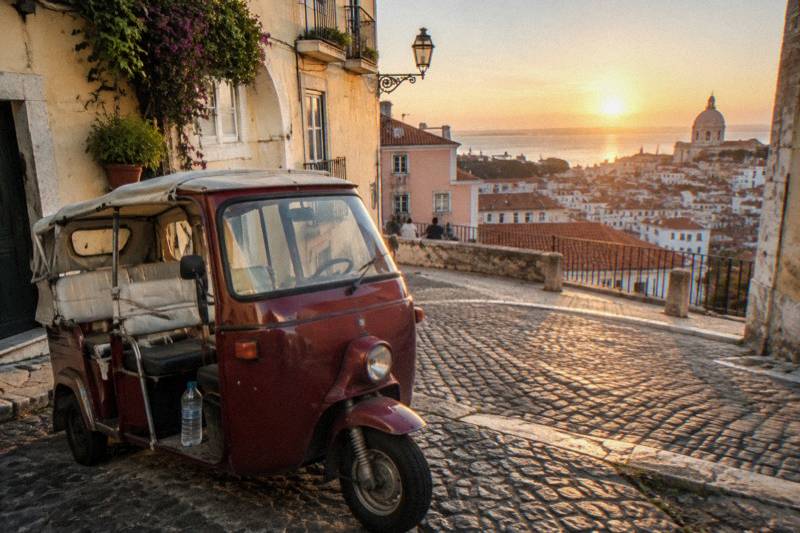
Tram 28 Lisbon: Route, Crowds And The Tour Alternatives
Tram 28E is the classic Lisbon ride, and the queues are real. Here is the route, the exact Carris ticket prices, the funicular situation, and the guided alternatives that cover the same hills.

Short answer
A Carris single ticket for Tram 28 costs 1.90 EUR, or 3.30 EUR bought on board, and a 24 hour Carris and Metro pass costs 7.25 EUR. The tram runs the full Martim Moniz to Campo de Ourique route through Graca, Alfama and Estrela. Queues at Martim Moniz are the main problem, and tuk tuk and walking tours cover the same streets without the wait.
Tram 28E is the ride every Lisbon guidebook puts on its cover: a vintage yellow tram grinding up hills too steep for anything else, past laundry lines, tiled facades and viewpoints that cost nothing to enjoy. It is also, on most days of the year, the ride with the longest queue in the city. The Carris network runs it as an ordinary commuter line, at ordinary commuter prices, which is exactly why everyone wants on. This guide lays out the route stop by stop, the exact ticket costs, the honest queue picture, the funicular closures that change how you move around the hills, and the guided tuk tuk and walking alternatives that cover the same streets without standing in line at Martim Moniz. Everything here comes from the Carris price tables, the verified site facts and the tour listings themselves. If you would rather ride with a guide than wait in the commuter queue, our comparison of the best tram tour options in Lisbon explains what you can and cannot book, from the tuk tuk route that shadows the tracks to other ways of seeing the same streets.
What Is The Tram 28 Route And Where Does It Go?
Tram 28E runs roughly 7 kilometres from Martim Moniz, north of the city centre, through Graca, Alfama, the Se cathedral, Baixa, Chiado, Bairro Alto and Estrela, to a terminus at Prazeres in Campo de Ourique, taking about 50 to 60 minutes end to end. The scenic stretch, the one photographs are made of, sits between Graca and Estrela, where the tram climbs narrow single-lane streets no bus can enter.
The route works in both directions, but most riders board at Martim Moniz and ride outward, which is where the famous queue forms. Going the other way, starting at Prazeres or Estrela, usually means a shorter wait and an emptier tram for the first stretch, a trick locals use without ever announcing it. The tram passes within a short walk of the Miradouro da Senhora do Monte, the Se cathedral, the Lisbon cathedral quarter, the Basílica da Estrela and the Estrela garden, so a full ride doubles as a crude sightseeing circuit of the old hill neighbourhoods.

It helps to know what the tram is not. It is not a tour. There is no commentary, no stops for photos unless you hop off and re-board, and in summer it is frequently standing room only with the windows shut. People who arrive expecting a guided experience are usually the people most disappointed by it. For a proper tour of the same streets, the tuk tuk options gathered on our tuk tuk cluster page and the guided city walks on the walking tours page exist precisely for that, and this guide compares them properly further down.
The neighbourhood sequence, roughly west to east if you ride from Martim Moniz outward:
| Route section | What you pass | Worth hopping off? |
|---|---|---|
| Martim Moniz to Graca | Vila Madalena-side streets, Miradouro da Senhora do Monte nearby | Yes, for the highest viewpoint in the old town |
| Graca to Alfama | Labyrinthine streets, Se cathedral visible below | Yes, Alfama rewards wandering on foot |
| Alfama to Baixa | Se cathedral, Portas do Sol viewpoint, descent to the flat centre | Portas do Sol is the classic photo stop |
| Baixa to Chiado | Rossio, Restauradores, the lift tower of Santa Justa nearby | Convenient for connections, not scenic |
| Chiado to Estrela | Bairro Alto edge, Sao Bento, Basílica da Estrela | Yes, for the basilica and garden |
| Estrela to Prazeres | Calmer residential streets, cemetery at the terminus | Rarely; most riders get off before this |
Riding the full length is a commitment. Most visitors ride Martim Moniz to Estrela or the reverse and walk the rest, which brings the journey down to about 40 minutes and pairs well with a walk back down through Bairro Alto.
How Much Does A Tram 28 Ticket Cost?
A single Carris ticket bought before boarding costs 1.90 EUR, while buying from the driver on board costs 3.30 EUR, and the tram is fully covered by the 24 hour Carris and Metro pass at 7.25 EUR, per the Carris price table. There is no separate tourist price and no surcharge for the heritage trams, which surprises people expecting a premium.
The cheapest way to ride is a rechargeable Viva Viagem or Navegante card loaded with credit, tapped at the platform machine before you board. Cash to the driver works, but at nearly double the price, and drivers do not always have change for large notes. The 24 hour pass is the obvious choice if you plan to ride the tram twice, use the Metro to reach Martim Moniz, or take other Carris trams and buses during the day, since three single rides already exceed its price. The Carris prices table publishes all of these figures and is the page to check before you travel, in case anything shifts.
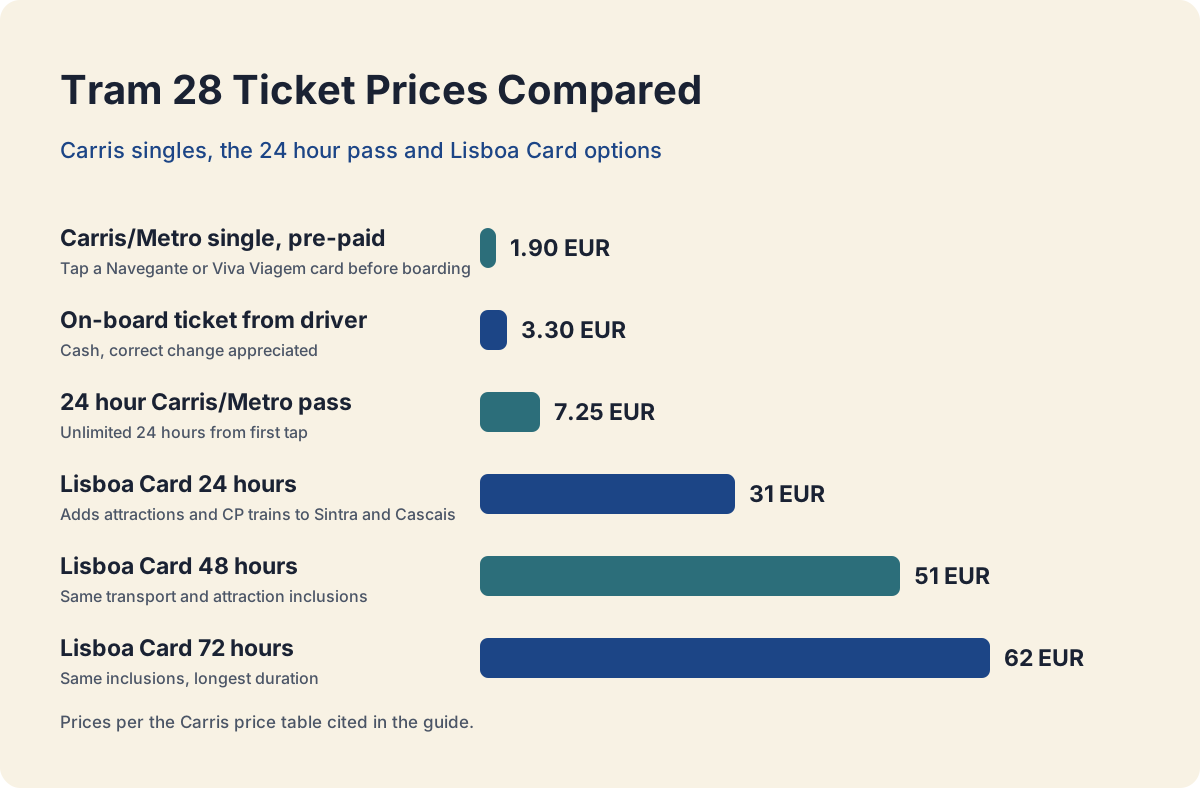
For visitors planning several days of riding, the Lisboa Card adds attractions on top of transport: 24 hours at 31 EUR adult, 48 hours at 51 EUR and 72 hours at 62 EUR, including Carris, Metro, trams, funiculars and the CP trains to Sintra and Cascais, plus free entry to more than 50 attractions. Whether the maths works depends on how many museums you actually visit, and our Lisboa Card worth it guide runs the numbers properly.
| Ticket | Price | Notes |
|---|---|---|
| Carris/Metro single, pre-paid | 1.90 EUR | Tap a Navegante or Viva Viagem card before boarding |
| On-board ticket from driver | 3.30 EUR | Cash, correct change appreciated |
| 24 hour Carris/Metro pass | 7.25 EUR | Unlimited 24 hours from first tap |
| Lisboa Card 24 hours | 31 EUR | Adds attractions and CP trains to Sintra and Cascais |
| Lisboa Card 72 hours | 62 EUR | Same inclusions, longest duration |
One point worth repeating: the tram is a normal service, so a pre-booked guided tour that includes a Tram 28 ride is really selling you the guide, not the seat. Several operators bundle a tram ride into a wider old town circuit, and those are compared below. If the tram itself is all you want, the ticket costs less than a coffee and pastel combined.
Those three are the formats this guide keeps returning to: the tuk tuk that follows the Tram 28 route with a guide, the private tuk tuk through Alfama, and the small-group walking tour with a meal included. The next sections explain when each one actually beats the tram.
Why Are The Tram 28 Queues So Long?
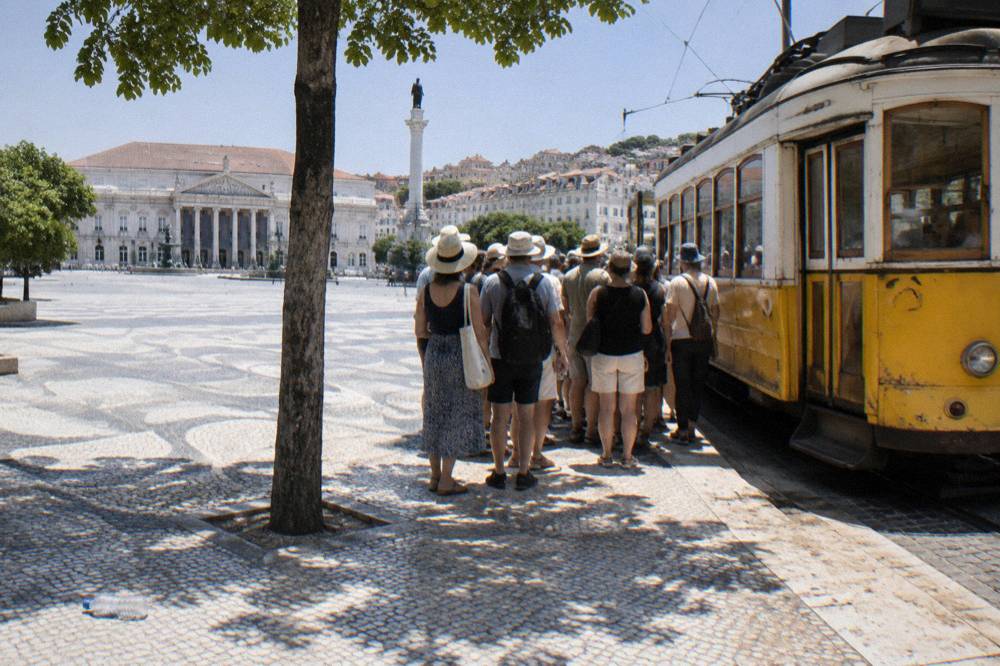
The queue at Martim Moniz forms because the tram is small, seats about 20 with standing room for roughly 20 more, runs every 10 to 15 minutes, and is the single most requested ride in a city receiving millions of visitors, so at midday in high season the wait can exceed an hour while trams fill up before they even reach the stop. Locals with monthly passes board the same vehicles, taking seats ahead of the queue.
The worst hours are between about 10:00 and 16:00, and the worst months are July and August, when the tram doubles as a mobile oven. Early morning, before about 09:00, and evening after about 19:00 are dramatically quieter, and the tram is arguably better at dusk anyway, when the streets it climbs are lit rather than baked. The other reliable move is boarding in the opposite direction: the Prazeres terminus in Campo de Ourique almost never has a queue, and you ride the scenic stretch with a seat.
Pickpocketing is the other honest caveat. The tram is consistently flagged in traveller advice as a spot where crowded vehicles and distracted tourists create easy targets, so keep bags in front, wallets out of back pockets, and be sceptical of sudden jostling near doors. Nothing about this should put you off riding; it should just put you off carrying a passport in an open pocket.
If an hour in a queue is not how you want to spend a morning, the alternatives are real and priced honestly. The tram covers Graca, Alfama and the old town hills; so do guided tuk tuks and walking tours, with a guide, a seat and no queue (see Tuk Tuks From The Port). For readers who already know they want that trade, the tuk tuk on the Tram 28 route runs two hours with pickup, from 80 EUR per person, with a 5.0 rating from 224 reviews on its listing.
Are The Funiculars And The Santa Justa Lift Running?
The Gloria, Bica and Lavra funiculars and the Santa Justa lift are closed to passengers, while the Graca funicular runs again, so visitors planning to hop between the hills by historic transport currently have one working funicular and the tram network, and Carris is the source to check for the current status of each.
This matters more than most guides admit, because the closed lifts sit exactly on the tourist circuit. The Santa Justa lift is the neo-Gothic elevator that connects Baixa to Bairro Alto, normally one of the most photographed pieces of transport infrastructure in the city, and the Bica funicular is the postcard one that descends to the river through a narrow tiled street. With all three funiculars plus the lift closed to passengers, the practical consequence is that you walk the hills, ride Tram 28, or take a guided vehicle. The Graca funicular, on the hill northeast of the castle, is the one running, and it happens to serve one of the best viewpoints in the old town, so it is a genuinely useful consolation rather than a token service. The full index of guides sits on Lisbon Portugal Tours.
| Historic transport | Status | Practical effect |
|---|---|---|
| Tram 28E | Running | Main heritage ride, full route |
| Graca funicular | Running | Links Graca hill toward the castle area |
| Gloria funicular | Closed to passengers | Restauradores to Bairro Alto must be walked |
| Bica funicular | Closed to passengers | River-side street accessed on foot |
| Lavra funicular | Closed to passengers | Minor, short alternative route |
| Santa Justa lift | Closed to passengers | Baixa to Chiado via the hill staircases |
The rule on these closures is simple: state the status and check Carris before you build an itinerary around any of them, because reopening dates are not confirmed and any promise of one would be a guess. The 24 hour pass covers funiculars where they run, so the Graca ride costs nothing extra if you hold one.
Is A Tuk Tuk On The Tram 28 Route A Better Option?
For most visitors who want the Tram 28 streets without the queue, a guided tuk tuk is the closest like-for-like swap: the Tram 28 route tuk tuk by Live Portugal runs 2 hours with pickup, from 80 EUR per person, holding a 5.0 rating from 224 reviews, and covers Graca, Alfama and the old town with a driver-guide narrating instead of a tram bell.
The comparison is not really about price, since 1.90 EUR versus 80 EUR is not a contest, it is about what the extra money buys. A tuk tuk seats a handful of people, departs when you do, stops where you ask, and comes with commentary in a way the tram never will. For travellers with limited mobility, small children, or simply a short stay where an hour in a queue is expensive, the maths changes completely. The listing for the Tram 28 route tuk tuk states pickup is included, which removes the walk to Martim Moniz entirely, and it is flagged with free cancellation, with the window stated on the booking page.
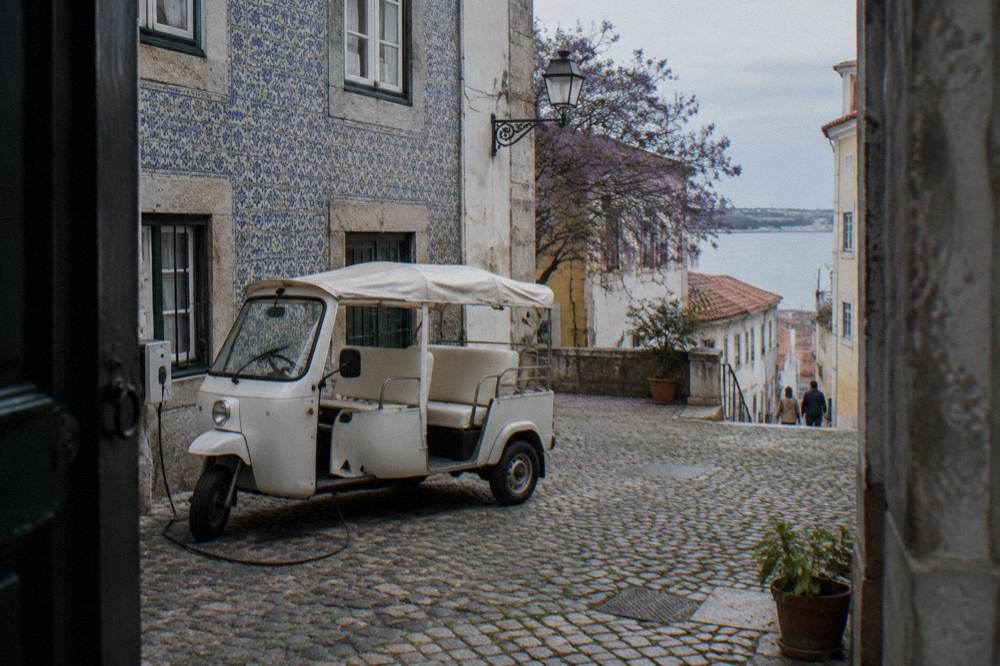
The cheaper variant is the private tuk tuk of Old Town and Alfama, from 28 EUR per person, running 1.5 to 4 hours depending on the option chosen, rated 4.8 from 1371 reviews. It is private rather than a shared group ride, and it focuses on the old town and Alfama rather than the full Tram 28 corridor. That per person rate makes it the value pick for couples and families. On the decision between them: the Tram 28 route tuk tuk is the one that deliberately shadows the tram's famous streets, while the private Alfama tuk tuk goes deeper into the single most atmospheric neighbourhood on that route.
For a side-by-side view:
| Option | Format | Duration | From | Rating and reviews |
|---|---|---|---|---|
| Tram 28E itself | Public tram, no guide | About 1 hour full ride | 1.90 EUR single | Not applicable, public service |
| Tram 28 route tuk tuk (Live Portugal) | Shared guided ride, pickup | 2 hours | 80 EUR per person | 5.0 from 224 reviews |
| Private tuk tuk, Old Town and Alfama | Private, per-person price | 1.5 to 4 hours | 28 EUR per person | 4.8 from 1371 reviews |
After that table, the private Alfama tuk tuk deserves its own look, because it is the option most readers end up booking once they see the per-person pricing.
Both tuk tuk formats solve the two problems the tram cannot: the queue and the silence. Neither solves the third, which is that Alfama is genuinely better understood on foot, at walking pace, with someone explaining what you are looking at.
Do Walking Tours Cover The Same Streets?
Yes, and often better: the Best of Lisbon small-group walking tour by Inside Lisbon runs 3 to 4 hours through the centre at a maximum of 14 guests, includes a meal, costs from 19 EUR per person, and holds a 4.9 rating from 5542 reviews, one of the largest review pools of any city tour on this site.
The tram route and the walking route overlap on the slopes of Alfama and Graca, but a walk enters the alleys the tram only skirts. Alfama is a neighbourhood built for feet: staircases, dead ends, tiny squares with one bakery and three cats, none of it visible from a tram window at 15 kilometres per hour. A guided walk also costs a fraction of a tuk tuk while covering more ground than most visitors expect, and the meal inclusion on this listing means the 19 EUR entry price is partly dinner.
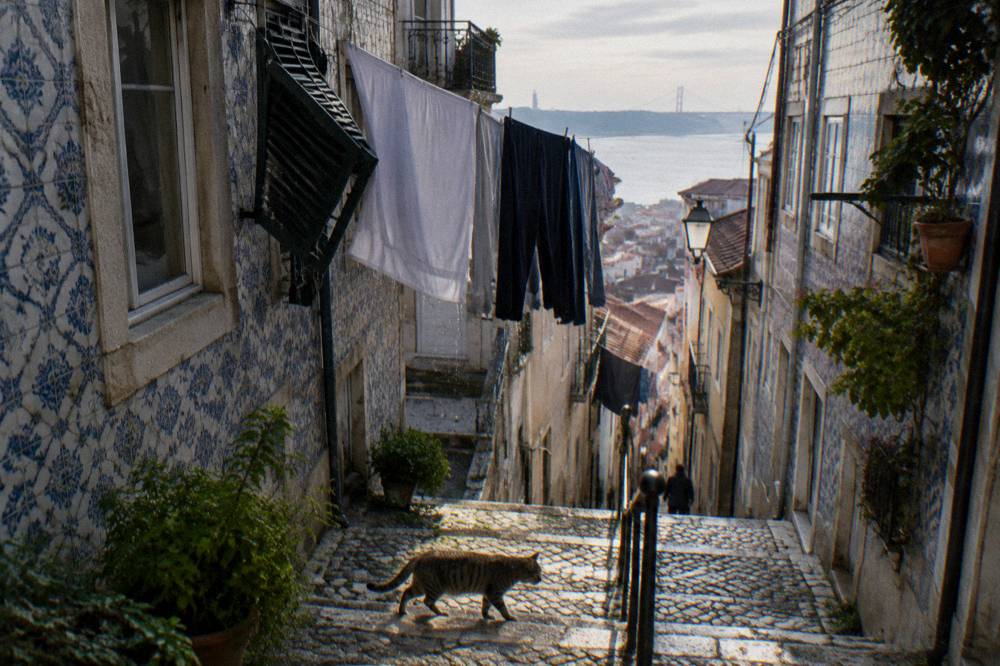
A guest on that listing, Catherine O, left a five-star review that captures the format's appeal: "Perfect tour with Natalia. We had a wonderful afternoon seeing the important sites in Lisbon. To make the tour even better, Natalia explained the history in an informative, interesting and entertaining way." Reviews are one person's experience, but 5542 of them averaging 4.9 is a body of evidence rather than a fluke.
The strategic play many visitors land on is doing both: ride the tram early in the morning for the experience, then take a guided walk for the understanding. If you prefer to plan your own route on foot instead, our self-guided walking tour of Lisbon maps a full day's circuit. For the guided version with the meal included, here is the listing again.
What About E-Bikes And Getting Up The Hills Another Way?
Electric bikes are the third queue-free option: the Hills, Alfama and Mouraria e-bike tour runs 3 hours at a maximum of 8 riders, from 25 EUR per person, rated 4.8 from 3859 reviews, and the motor flattens exactly the hills that make Tram 28 famous.
E-bikes occupy the middle ground between the tram and a walk. You cover the full old town circuit in three hours, climb to the Graca viewpoints without breaking a sweat, and stop freely for photos. The Alfama and Mouraria focus of this tour matches the most scenic end of the tram route, and the max-8 group size keeps it closer to a private ride than a bus tour. For anyone comfortable cycling in a city, it is arguably the best value of all the alternatives named in this guide, and the 25 EUR entry price sits between the tram ticket and every tuk tuk option.
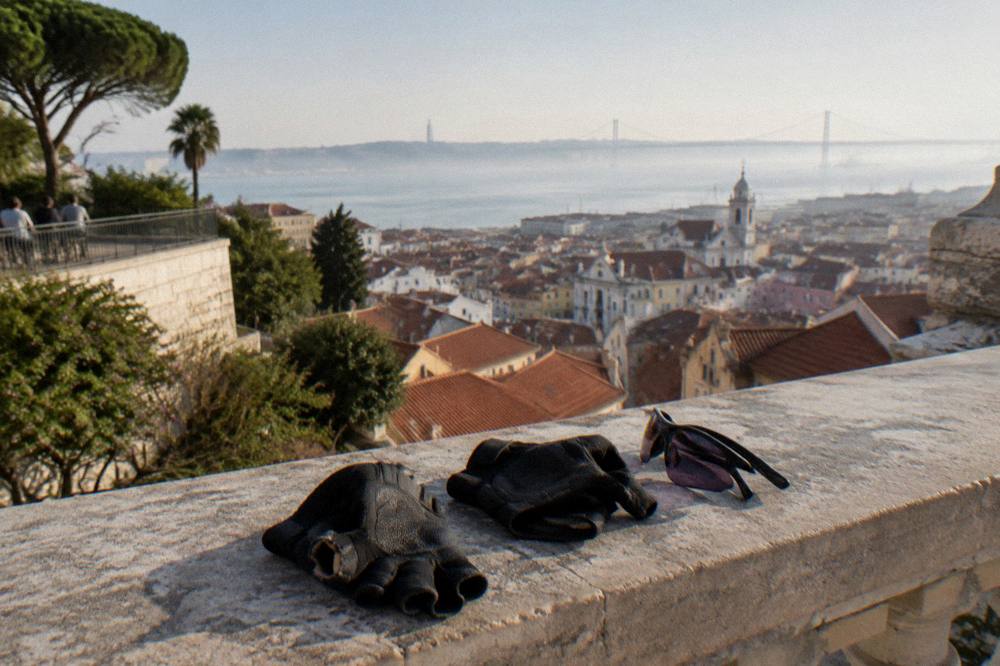
The e-bike option rounds out the full set of ways to see the tram's streets, so here it is directly.
Whichever format you choose, the hills are the point. Lisbon was built on them, the tram exists because of them, and every tour alternative in this guide, tuk tuk, walk or e-bike, is really just a different answer to the same question of how to get up and down them pleasantly.
Common Questions About Tram 28 Lisbon
How much does Tram 28 cost?
A single ticket costs 1.90 EUR bought before boarding with a Navegante or Viva Viagem card, or 3.30 EUR from the driver on board. The 24 hour Carris and Metro pass at 7.25 EUR covers the tram and the rest of the network.
Where does Tram 28 start and finish?
The route runs between Martim Moniz, just north of the centre, and Prazeres in Campo de Ourique, passing Graca, Alfama, the Se, Baixa, Chiado and Estrela along the way. A full ride takes about an hour.
How do I avoid the Tram 28 queue?
Ride before about 09:00 or after about 19:00, or board at the Prazeres terminus in the opposite direction, where waits are usually short. Guided tuk tuk and walking tours cover the same streets with no queue at all.
Is the Santa Justa lift open?
The Santa Justa lift is closed to passengers, along with the Gloria, Bica and Lavra funiculars. The Graca funicular runs again. Check Carris for the current status of each before planning around them.
Is a tuk tuk better than Tram 28?
The tram costs 1.90 EUR and is an experience rather than a tour. A guided tuk tuk on the Tram 28 route, from 80 EUR per person, covers the same streets with pickup, commentary and no queue, which suits short stays, families and anyone unwilling to wait an hour at Martim Moniz.
Can I use the Lisboa Card on Tram 28?
Yes. The Lisboa Card includes unlimited Carris transport, covering trams and funiculars, plus the Metro and CP trains to Sintra and Cascais, and free entry to more than 50 attractions. Adult prices run 31 EUR for 24 hours to 62 EUR for 72 hours.