Free Things To Do In Lisbon: Free Walking Tours And Free Sights
Lisbon gives away a surprising amount for nothing: viewpoints, old quarters, a riverfront built for wandering and a cliff formation outside the city that costs nothing at all. Here is what is genuinely free, what only looks free, and where a paid tour earns the upgrade.

Short answer
The genuinely free things in Lisbon include the Alfama and Mouraria old quarters, the main viewpoints, the riverfront between Praça do Comércio and Belem, and Boca do Inferno in Cascais, which has free 24-hour access. Tip-based free walking tours cost whatever you decide to tip, typically 10 to 50 euros per person.
Lisbon is a city that shows off in public. Its best architecture is spread across hills you can climb for nothing, its oldest streets belong to anyone willing to walk them, and the river that built its wealth frames every second view. Budget travellers notice this quickly: the experiences that cost money here, the palaces, the dinners, the cruises, sit on top of a free layer that is substantial enough to fill two or three days on its own. This guide separates what is genuinely free from what only looks free, and finishes with the one paid upgrade that makes sense once you have walked yourself tired. When your legs finally give out, our comparison of Lisbon's walking, tuk tuk, tram and bus tours helps you pick the smartest way to cover the rest of the city.
Which Lisbon Sights Are Genuinely Free To Enter?
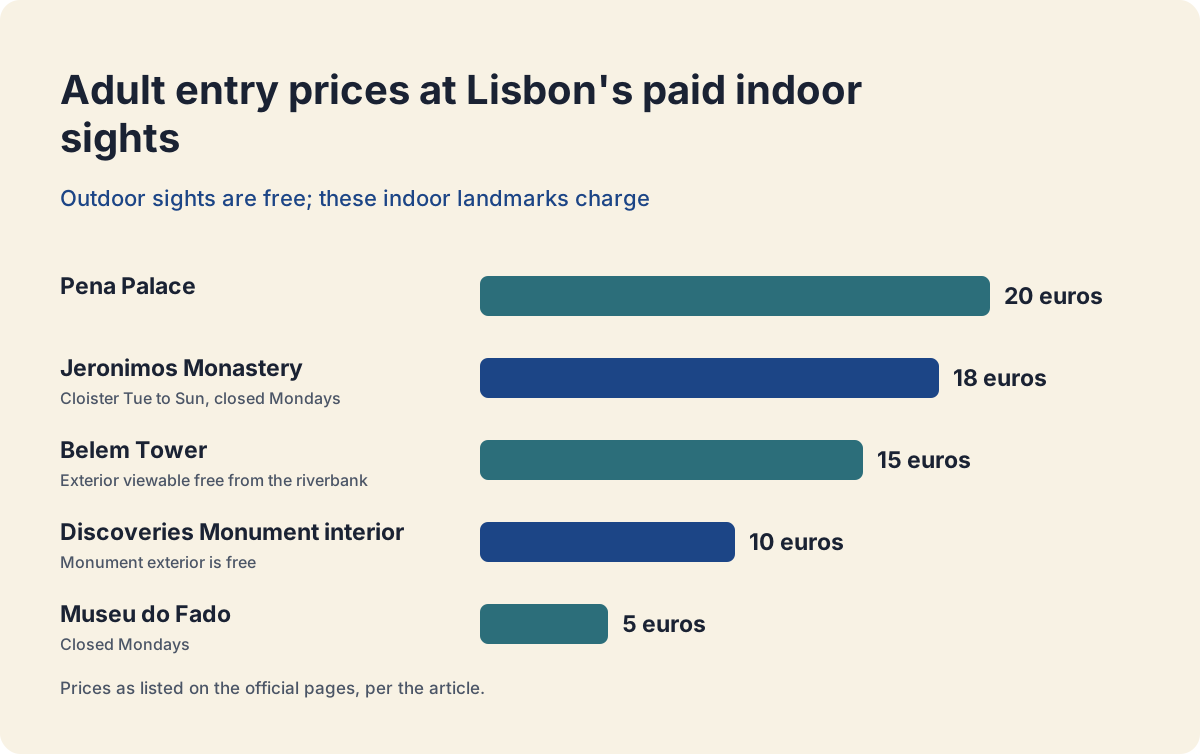
The genuinely free sights are the outdoor ones: the Alfama and Mouraria quarters, the Graça and Senhora do Monte viewpoints, the Praça do Comércio and the full Tagus riverfront, the LX Factory street art district, and Boca do Inferno near Cascais, which has free access at any hour. Indoor landmarks, by contrast, almost all charge: the official page lists Pena Palace at 20 euros and the Museu do Fado at 5 euros.
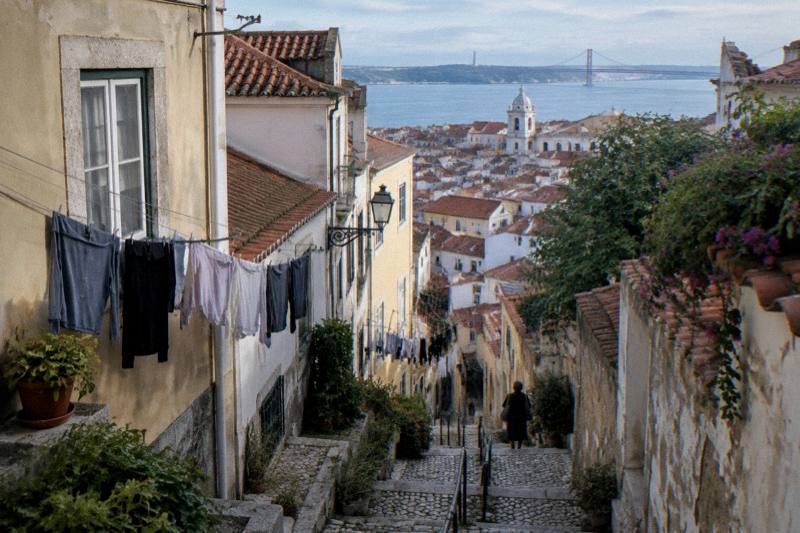
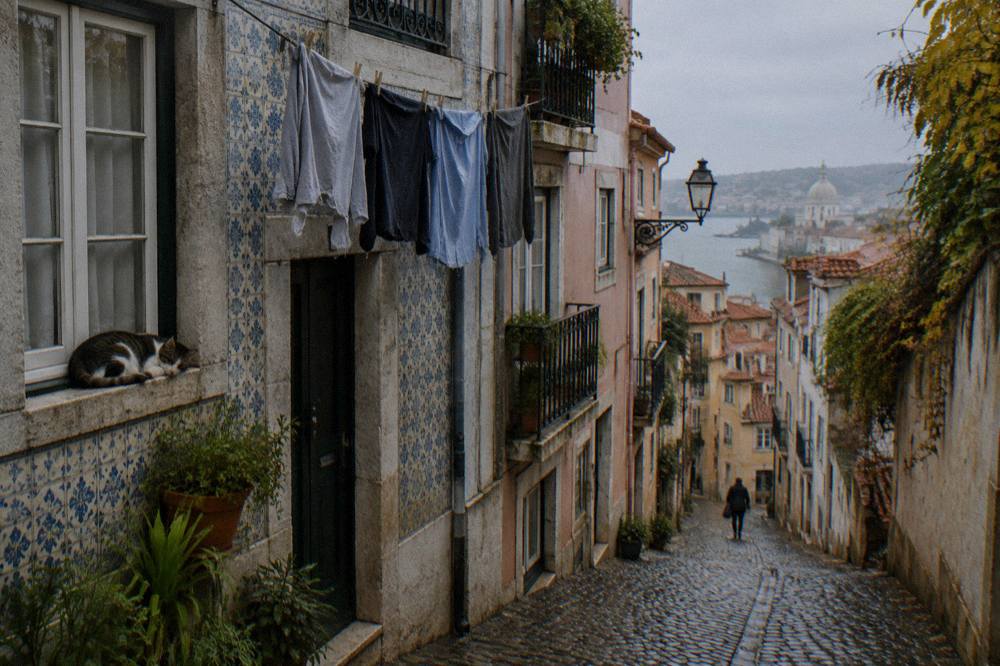
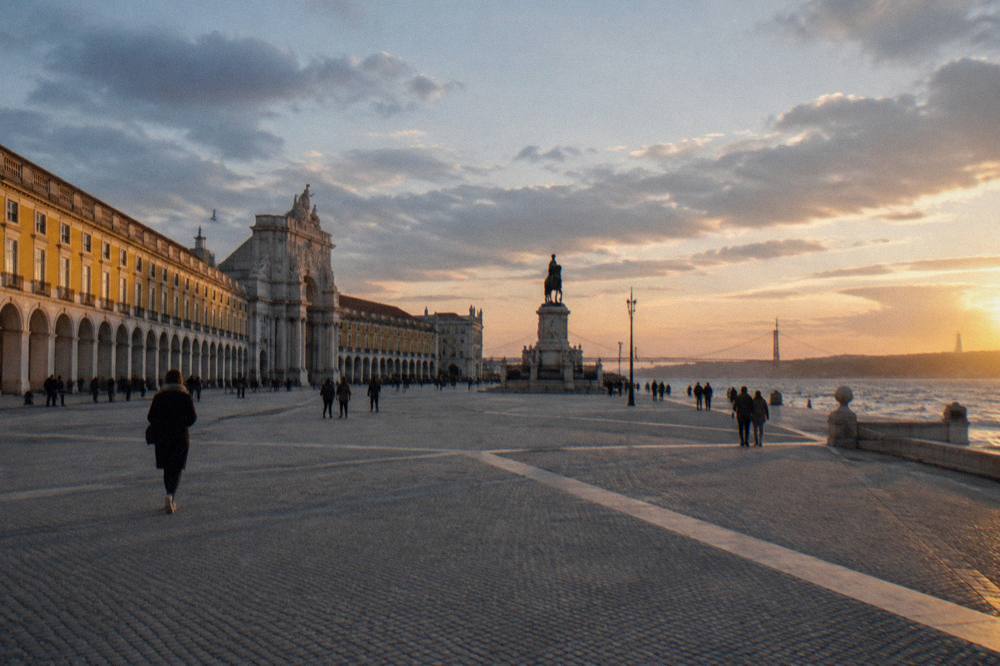
The honest split in Lisbon is between the city as a stage set and the city as a museum. The stage set is free. You can spend a full day in Alfama and Mouraria without paying a cent, following lanes that predate the great earthquake that reshaped the city, and the experience is not a watered-down version of the paid attractions, it is the attraction. The same goes for the riverfront. The walk from Praça do Comércio west along the Tagus, past the docas and on toward Belem, is one of the great free city walks in Europe, and the monuments you pass on the way, the Discoveries Monument, the Belem Tower from the outside, the Jeronimos Monastery exterior, are all viewable without a ticket. If you want a local guide without committing to a ticket price, our guide to free walking tours in Lisbon explains how the tip-based model works and which neighbourhoods each route covers.
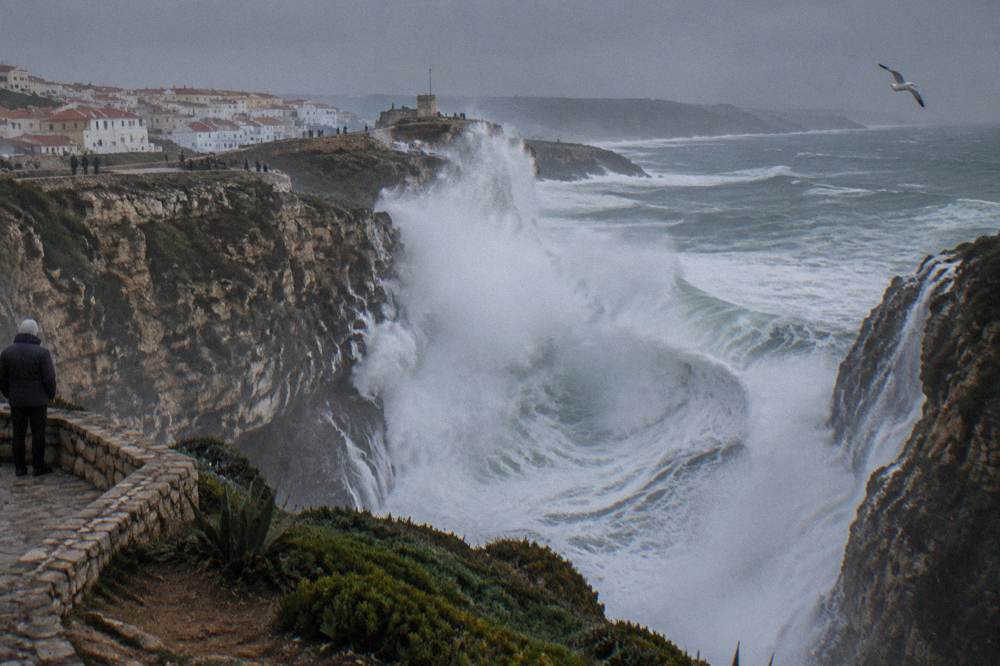
Indoor sights are a different story, and budget planning should be honest about it. Jeronimos Monastery lists an adult ticket at 18 euros and Belem Tower at 15 euros on the official page. The Pasteis de Belem shop, the original home of the custard tart, costs about 1.50 euros per pastel, which is close enough to free to count as a stop rather than a splurge. Boca do Inferno, the collapsed sea cliff at Cascais, is the standout among truly free sights: open around the clock, no ticket, no gate, just a dramatic ocean chasm that costs a train or bus fare to reach.
| Sight | Entry cost | Notes |
|---|---|---|
| Alfama and Mouraria quarters | Free | Self-guided wandering, lanes and stairways |
| Praça do Comércio and Tagus riverfront | Free | Full walk to Belem possible |
| Boca do Inferno, Cascais | Free, open 24h | About 25 to 30 km from central Lisbon |
| Discoveries Monument exterior | Free | Interior viewpoint and exhibition 10 euros |
| Jeronimos Monastery | 18 EUR adult | Cloister Tue to Sun, closed Mondays |
| Belem Tower | 15 EUR adult | Exterior viewable free from the riverbank |
| Museu do Fado | 5 EUR | Closed Mondays |
A practical note on churches: many Lisbon churches admit visitors for free outside service times, but this varies by church, so treat it as a possibility to check at the door rather than a rule to plan around. The free layer of Lisbon is large, but it is mostly stone, sky and water. The paid layer is where the interiors live.
Where Are The Best Free Viewpoints In Lisbon?
The best free viewpoints are Graça's Senhora do Monte, São Jorge Castle's surrounding lanes, Santa Catarina, São Pedro de Alcântara and the Arc de Rua Augusta's neighbouring terraces, all reachable on foot at no cost. Only the castle interior and one or two terrace bars charge, and the open viewpoints outnumber them.
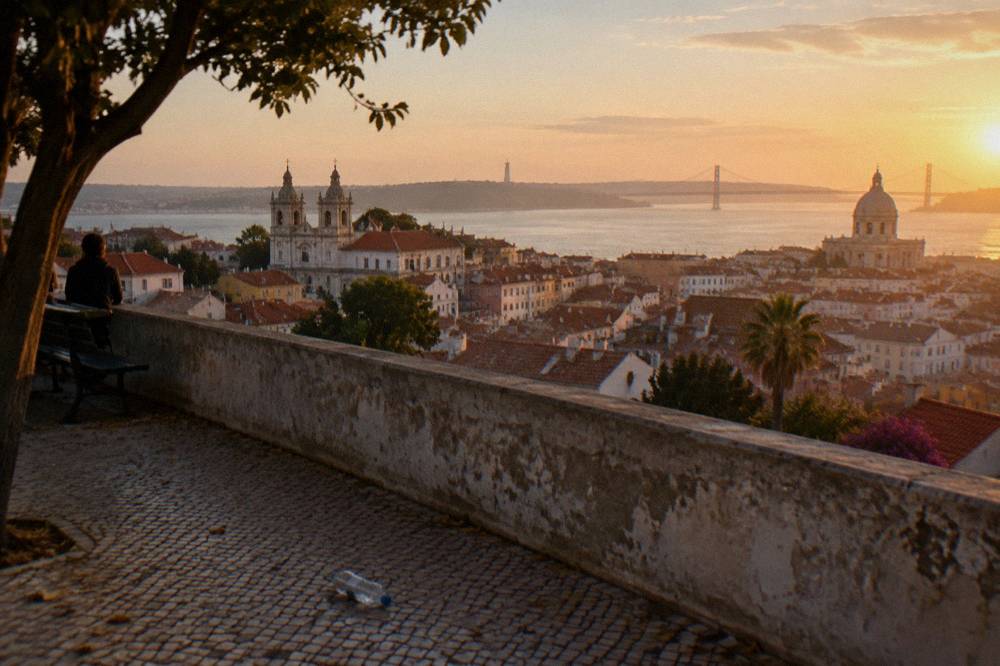
Lisbon has seven hills and a viewpoint culture to match. Senhora do Monte in Graça is the highest of the free ones and looks across the whole city toward the river, and it costs exactly nothing because it is simply a public terrace. Santa Catarina, down toward Bairro Alto, does the same job for the south-facing river view and tends to be busier at sunset. São Pedro de Alcântara, at the top of the Gloria hill, gives you the postcard look back at the castle. Because the Gloria funicular is closed to passengers, check Carris for the current status and expect to walk the hill, which is short and steep rather than long.
The trick worth knowing is that the paid viewpoints, the castle walls, the monument terraces, are not dramatically better than the free ones, they are just higher or fenced. What you are paying for at São Jorge Castle is the interior and the archaeology, not a monopoly on the view. Many of the small squares around the castle gates give you 80 percent of the same panorama for free, with a bakery instead of a turnstile.
For travellers who would rather ride between viewpoints than climb them, an electric bike tour covers the hills without the sweat. The City Highlights and Viewpoints E-Bike Tour, 4.9 from 2,241 reviews and from €29 per person for three hours, strings the panoramas together with a guide, and one guest review notes the tour was "a good blend of the historic and the more modern areas of the city." That is a paid option, but it solves the one problem the free viewpoints have, which is the climb.
Are Free Walking Tours In Lisbon Really Free?
Free walking tours in Lisbon are tip-based: you book a place, walk with a guide, and pay what you think the walk was worth at the end, with reported tips typically running 10 to 50 euros per person. The tour itself has no upfront price, but it is a paid tour with a flexible price tag rather than a charity.
Tip-based free walking tours are the standard budget entry point in Lisbon, and the model works exactly as it does elsewhere in Europe: the guide takes a group through the old quarters, usually Alfama, Mouraria or the Baixa, and at the end each guest decides what to hand over. Because the tip is the entire business model, the guides work hard, and the walks are a genuine bargain if you are happy with a large group and a general introduction. The live cards for these walks, with current meeting points and routes, are collected on the Lisbon Portugal Tours cluster page at free walking tours in Lisbon. Do not plan the rest of your day around fixed times until you have checked the current schedule there, and treat the tip as a real budget line, not a rounding error: at the typical range, a couple will hand over roughly what a fixed-price group tour costs.
The honest limitation is group size and depth. A tip-based walk introduces the city, but it cannot go deep into the food, the fado history or the small museums, because it is built for a crowd standing in a square. That is where the paid upgrade earns its price.
| Tip-based free walk | Paid small-group walk | |
|---|---|---|
| Upfront price | None | From €19 to €22 per person |
| Real cost | Tip, typically 10 to 50 EUR per person | Fixed, printed on the listing |
| Group size | Large and variable | Max 14, some capped at 8 |
| Food included | No | Meal listed on most paid walks |
| Depth | City overview | Routes and stops chosen for the group |
The upgrade worth naming is the Best of Lisbon Small-Group Guided Walking Tour, run by Inside Lisbon: 4.9 from 5,542 reviews, from €19 per person for three to four hours, capped at 14 guests with a meal listed. A guest review describes it plainly: "Perfect tour with Natalia. We had a wonderful afternoon seeing the important sites in Lisbon." At that price it sits at or below the upper end of what a tip-based walk realistically costs, with a meal on top. You can read the fuller walking tours compared breakdown on the cluster page, and check availability on the operator's live listing before you commit.
Which Old-Quarter Walks Cost Nothing But Shoe Leather?
Alfama, Mouraria, Graça and the Baixa grid are all free to walk and each needs roughly two hours to do properly. None requires a ticket, a guide or a booking, and together they cover the old city, the winding street plan and the rebuilt commercial heart, which is most of what Lisbon's paid tours sell.
Alfama is the obvious starting point and still the best free experience in the city. It survived the great earthquake that flattened much of the rest of the city, so the lanes are genuinely old in plan: steps, dead ends, tiny squares and laundry lines, with the dome of the pantheon appearing when you least expect it. Walk it slowly and deliberately get lost once, because the point of Alfama is the unplanned corner, not an efficient route. Mouraria, just north, is rougher-edged and where fado lived before it became a ticketed show, and its streets are equally free. Graça sits above both and connects them to the Senhora do Monte viewpoint, so a loop of the three quarters is a natural half-day.
The Baixa, by contrast, is the rebuilt grid from after that earthquake, and walking it costs nothing while showing you what planned urban rebuilding looked like: straight streets, uniform facades, and the Rua Augusta arch framing the square. If your legs give out, note that the city's historic lifts are not currently an option: the Gloria, Bica and Lavra funiculars and the Santa Justa lift are closed to passengers, though the Graca funicular runs again, so check Carris for the current status before planning around any of them.
For structure without paying a guide, our self-guided walking route through Lisbon maps a full day of these quarters with stop-by-stop directions, and the is a walking tour in Lisbon worth it question is worth reading before you decide between going alone and joining a group.
A middle option is the Best of Lisbon Walking Tour through Rossio, Chiado and Alfama, 4.9 from 3,367 reviews and from €22 per person for three hours with a meal listed. It covers exactly the territory described above, but with someone else carrying the history.
Is The Tram 28 Ride Free If You Already Have A Ticket?
Tram 28 is not free, but it can be cheap: with a Carris/Metro single at 1.90 euros or a 24-hour pass at 7.25 euros, the famous ride through Graça, Alfama and Estrela costs almost nothing beyond the fare. Buying on board instead costs 3.30 euros, so the fare you choose matters more than the route.
Tram 28 is the classic budget mistake in Lisbon, because travellers assume the vintage yellow tram is a tourist service and buy a ticket on board at 3.30 euros, when it is a normal Carris line that accepts normal Carris fares. Validate a 1.90 euro single or a 24-hour pass and the ride becomes one of the cheapest scenic experiences in Europe, grinding up the hills through Graça and down through Alfama past the cathedral. The full route and fare detail is in our complete Tram 28 guide, including how the service pattern in the Estrela stretch can shift during engineering works.
The 24-hour pass at 7.25 euros is the better buy if you plan to ride trams and metro through the day, since it pays for itself in four single trips. The Lisboa Card, which bundles transport with attraction entry at 31 euros for 24 hours, only makes sense if you are also visiting paid sights that day; the is the Lisboa Card worth it breakdown runs the numbers.
| Ticket | Price | Good for |
|---|---|---|
| Carris/Metro single | 1.90 EUR | One trip, including Tram 28 |
| On-board tram ticket | 3.30 EUR | Emergency option only |
| 24-hour Carris/Metro pass | 7.25 EUR | Unlimited trams, metro, buses |
| Lisboa Card 24h | 31 EUR | Transport plus 50+ attractions |
Petty theft on crowded trams is the one real cost to plan around. Keep bags in front of you and phones zipped away on Tram 28 specifically, because it is the line that concentrates tourists and pickpockets in the same small space. Nothing dramatic, just the standard big-city caution, and it applies equally to the free viewpoints at sunset.
What Free Things Sit Outside The City?
The standout free sight outside Lisbon is Boca do Inferno at Cascais, open around the clock with no ticket, reached by a roughly 40 to 50 minute train ride. Cascais town and its beaches are free to wander, while the big day-trip destinations, Sintra, Fatima, Obidos and Nazare, charge for their headline interiors.
Boca do Inferno, the "mouth of hell", is a collapsed sea cave on the Cascais coast where the Atlantic forces itself into a rock chasm, and it costs nothing to stand at the rail and watch. Cascais itself, a former fishing town turned resort, is a free wander of a place: the bay, the old town lanes and the coastal path toward the Boca are all public. The Cascais train line from Lisbon's Cais do Sodre station takes roughly 40 to 50 minutes, so the whole outing costs a train fare and whatever lunch costs. Note the official pages list a Padrão dos Descobrimentos full ticket at 10 euros if you climb the monument back in Belem, so the free list and the paid list sit close together along this coast.
Sintra is the honest counter-example. The town and the Sintra-Cascais road are free to look at, but everything that makes Sintra Sintra is ticketed: the official Parques de Sintra page lists Pena Palace Essential Visit at 20 euros, Quinta da Regaleira at 20 euros, the Moorish Castle at 12 euros and even the Cabo da Roca essential visit at 5 euros. That is a paid day trip, and pretending otherwise leads to standing at gates. The question of whether to take the Sintra train or a tour covers the trade-offs, including the roughly 40-minute direct train from Rossio that runs about every 20 minutes.
Further afield, the distances add up: Fatima is about 128 km by road from central Lisbon, Obidos about 84 to 87 km, and none of the headline sights there are free to enter in the paid sense, though Fatima's sanctuary esplanade itself is a public space. Budget travellers should treat those as day trips with transport and possibly tour costs attached.
| Destination | Distance from Lisbon | Free element | Paid element |
|---|---|---|---|
| Cascais and Boca do Inferno | About 25 to 30 km | Boca do Inferno, beaches, old town | Train fare |
| Sintra | About 25 to 30 km | Town lanes | Palaces from 5 to 20 EUR |
| Obidos | About 84 to 87 km | Walled-street wandering | Castle interior attractions |
| Fatima | About 128 km | Sanctuary esplanade | Transport and guided visits |
When Does Paying For A Tour Beat Going Free?
Paying beats free when a fixed price is lower than the realistic tip, when you want a small group, or when food, tickets or transport are included. The paid walking tours in the roster start from €19 per person with meals listed, which is at or below the top of the typical 10 to 50 euro tip range, so the upgrade is often cheaper than it looks.
The maths is the part most budget guides skip. A tip-based walk that earns the guide well will often collect 20 euros or more per person, and a family of four should budget for that honestly. Against it, the fixed-price options start at 19 euros with a meal listed on the listing, and the small-group caps mean you can actually ask questions. That reframes the paid tour from splurge to alternative, and it is why this guide treats it as an upgrade rather than a separate category.
The same logic applies to the hills. Lisbon's free viewpoints demand climbing, and the funicular situation makes some of the lifts unavailable, so a paid e-bike tour is effectively paying for altitude. The Seven Hills Half-Day Electric Bike Tour, 4.9 from 1,739 reviews and from €24 per person, turns the punishing geography into a flat ride, which is a genuine service in a city this steep.
| Tour | Price | Rating | What it replaces for free |
|---|---|---|---|
| Best of Lisbon Small-Group Walk | From €19 pp | 4.9 from 5,542 reviews | Tip-based walk plus a paid snack stop |
| Rossio, Chiado and Alfama Walk | From €22 pp | 4.9 from 3,367 reviews | Self-guided old-quarter route |
| Seven Hills Half-Day E-Bike | From €24 pp | 4.9 from 1,739 reviews | Climbing to the free viewpoints |
| City Highlights and Viewpoints E-Bike | From €29 pp | 4.9 from 2,241 reviews | Same, with a guide's commentary |
Free cancellation is flagged on all of these listings, though the window varies per listing, so confirm it on the booking page rather than assuming a standard policy.
How Do You Build A Full Free Day In Lisbon?
A realistic free day: morning in Alfama and Mouraria, midday at Senhora do Monte and Graça, afternoon walking the Baixa grid and the riverfront to Belem, sunset at Santa Catarina, with only transport and food to pay for. Done on foot with a 1.90 euro single or a 7.25 euro day pass, the day's total cost is the fare plus meals.
Start early, because Alfama at 9am is a different place from Alfama at noon, and the free layer of Lisbon rewards the hours before the coaches arrive. Work uphill from the cathedral through the lanes to Graça, take in Senhora do Monte while the light is still low, then descend through Mouraria toward the Baixa for lunch. If you have followed the tip-based walk option earlier in your trip, this is the day you apply what you learned at your own pace. Afternoon belongs to the river: the walk from Praça do Comércio westward is flat, long and entirely free, and you can decide at Belem whether to pay for the Jeronimos cloister at 18 euros or admire the exterior and spend the money on pasteis at about 1.50 euros each.
The evening is the viewpoint hour. Santa Catarina or any of the Graça terraces will do, and both cost nothing. If your legs are finished, the City Highlights and Viewpoints E-Bike Tour covers the same territory from €29 per person, 4.9 from 2,241 reviews, with one guest review praising a guide who "did a great job of making everyone feel welcome and was well-informed."
Season matters more than budget here. Typical October days still reach about 22 degrees, while November is the wettest month at over 100 mm of rain on the climate averages, so a free walking day is a better bet in the shoulder months than in deep winter. The best time to visit Lisbon guide has the month-by-month detail.
Is Lisbon A Good City For Budget Travellers Overall?
Yes: Lisbon's free layer is unusually deep for a European capital, with whole quarters, viewpoints and a riverfront costing nothing, and its paid upgrades start lower than most, from €19 for a small-group walking tour with a meal. The main budget risks are ticketed palaces, tip creep on free walks and on-board tram fares.
Budget travellers do well here because the city's appeal was never indoors. Other capitals lock their charm behind museum doors; Lisbon's is spread over hills and along a river, and the climate averages, with typical summer highs near 28 degrees and mild winters around 14, make outdoor sightseeing workable nearly all year. Two practical entries round out the picture: the EU Entry/Exit System is in operation at the border, and ETIAS is not yet required for US and UK visitors, so the paperwork side of a budget trip stays simple for now.
The pitfalls are predictable. Palaces in Sintra can consume 20 euros each before lunch, so budget visitors should pick one palace and lean on Cascais and the free quarters instead. Tips on free walks should be budgeted as real spending, and the 3.30 euro on-board tram fare quietly triples the cost of a ride that a validated ticket makes cheap. Get those three right and Lisbon is one of the most generous free-sight cities in Western Europe.
Common Questions About Free Things In Lisbon
Is Tram 28 free?
No. It is a regular Carris line: 1.90 euros with a single ticket or covered by the 7.25 euro 24-hour pass. Buying a ticket on board costs 3.30 euros, so validate before boarding.
Are Lisbon's viewpoints free?
The main ones are. Senhora do Monte, Santa Catarina and São Pedro de Alcântara are public terraces with no charge. Only enclosed attractions like the castle interior charge for the view.
Do I have to tip on a free walking tour?
Yes, in practice. The tour has no upfront price but the tip is the guide's entire income, with typical contributions reported at 10 to 50 euros per person. Budget it as a real cost.
Is Boca do Inferno free to visit?
Yes. The cliff formation at Cascais has free access and is open around the clock, with no ticket or gate. You only pay for the train or bus to reach Cascais.
Are Jeronimos Monastery and Belem Tower free?
No. The official page lists Jeronimos at 18 euros for adults and Belem Tower at 15 euros. The exteriors and the surrounding riverfront walk are free.
What is the cheapest way to see Alfama?
Walk it. Alfama is a free public quarter, and the self-guided loop through its lanes toward Graça costs nothing but effort. A small-group paid walk from €19 adds a guide and, on most listings, a meal.