Lisbon Travel Guide: Neighbourhoods, Transport And Planning
Lisbon rewards planning more than most capitals: the hills shape everything, three funiculars and the Santa Justa lift are closed to passengers, and a handful of ticket prices decide whether your day flows or stalls. This guide covers the neighbourhoods, the airport transfer, transport costs, entry rules and the tour formats first-timers book most.

Short answer
Plan around Lisbon's hills, not just its sights. A Carris or Metro single ticket is 1.90 EUR, the 24 hour pass is 7.25 EUR, and the airport metro costs the same 1.90 EUR plus a 0.50 EUR card. The Gloria, Bica and Lavra funiculars and the Santa Justa lift are closed to passengers; the Graca funicular runs again. Most first-timers pair a city walk with a Sintra day trip.
Lisbon is a city of hills stacked above a wide river, and almost every planning mistake a first-timer makes traces back to that geography. The historic quarters climb and drop without warning, the tram that looks charming on the map is standing-room crush by mid-morning, and the funiculars you may have read about are, with one exception, closed to passengers. Get the basics right, which neighbourhood, which ticket, which day trip, and the city opens up quickly. This page pulls the planning layer together: where to base yourself, what the transport actually costs, what entry rules apply this year, and which guided formats are worth the money on a first visit. For a wider look at the format landscape, the guided walks overview is the natural next stop. American visitors often ask how safety fits into all this planning, and the straight answer on whether Lisbon is safe for US travellers right now covers entry rules, pickpocket awareness, and how guided tours keep you oriented in unfamiliar quarters.
What Makes Lisbon Different From Other European Capitals?
Lisbon is built on steep hills above the Tagus, its transport network still uses small trams designed for another century, and several of its famous lifts are currently out of service, so the way you plan each day matters more than in flatter cities like Madrid or Berlin. The Alfama and Mouraria quarters are labyrinths of stepped lanes where a ten-minute walk can feel like thirty. The riverfront flats of Belem and the Baixa grid are easy, but they sit at the bottom. This is why guided formats sell so well here: a three-hour small-group walk with a meal included, an e-bike tour that flattens the hills, a private tuk tuk for the old town. Each one exists because the terrain punishes the unprepared.
The city is also compact in a way that surprises people. Sintra, the single most-booked day trip, sits roughly 25 to 30 km away by road, about 40 minutes on the direct urban train from Rossio. Cascais is a similar distance, and Fatima about 128 km. Practically everything a first-time visitor wants sits inside a triangle you can cross in under an hour, once you understand which ticket to buy and which line to avoid at peak times.
Weather shapes the calendar too. Typical Lisbon summers run to mean daily highs around 28 to 29 degrees in July and August with almost no rain, while autumn months like October average roughly 100 mm of rain across the month, and November more still. June is the festival month, with the Santo Antonio celebrations peaking on 12 and 13 June, and the Web Summit tech conference fills the city in November. If you want the reasoning month by month, the best time to visit Lisbon guide breaks down crowds, weather and prices across the year.
Which Neighbourhoods Should A First-Timer Focus On?
Baixa and Chiado for central convenience and flat walking, Alfama and Mouraria for atmosphere and the old lanes, Belem for the monuments and pastel de nata, and Principe Real or Avenida da Liberdade for a calmer, more local base with fewer landmark sights. Each quarter has a distinct character, and the honest answer for most visitors is a mix: sleep central, wander east into the old town, and give Belem a half-day of its own rather than squeezing it between other stops.
| Neighbourhood | Character | Best for | Watch out for |
|---|---|---|---|
| Baixa | Rebuilt grid of the downtown core, flat | First-timers, transport hub | Touristy restaurants on the main drags |
| Chiado | Elegant shops and cafes | Cafe culture, theatre, central base | Steep edges towards Bairro Alto |
| Alfama | Oldest quarter, stepped lanes | Fado, viewpoints, getting lost | Serious slopes; confusing at night |
| Mouraria | Gritty, multicultural, fado roots | Food walks, street art | Fewer postcard sights |
| Belem | Monumental riverfront | Jeronimos, Belem Tower, pastries | 20 minutes from the centre; closed Mondays |
| Principe Real | Leafy, residential-chic | Quieter stays, small boutiques | Fewer landmark sights |
Alfama deserves a specific warning and a specific reward. The warning: it is a maze, and it is where petty theft is most commonly reported, so keep bags zipped and in front of you, the standard advice for any crowded tourist district. The reward: it is the neighbourhood where fado was born, and a guided walk with a fado show attached saves you the guesswork of picking a venue in the dark. The food tour scene also concentrates here and in Mouraria, where the old taverns survive; the food tours cluster lists the guided options that walk you through both.
Belem trips people up on Mondays. The Jeronimos Monastery cloister runs Tuesday to Sunday, 9:30 to 17:30, and is closed Mondays, and the Museu do Fado in Alfama follows the same closed-Monday pattern. If your itinerary puts Belem on a Monday you get the riverside, the Discoveries Monument exterior and the pastry queue, but not the cloister. Plan around it.
The three formats above cover the classic first-visit triangle: a city orientation walk, the Sintra day trip, and an evening food and wine route. Between them, most travellers find their feet in the first 48 hours. The Best of Lisbon small-group walking tour, from 19 EUR per person with a 4.9 rating across 5,542 reviews, includes a meal and caps groups at 14, which is why it anchors this guide's recommendations; it is also the cheapest guided orientation on the roster.
How Do You Get From The Airport To The Centre?
The metro is the standard answer: the Red Line runs from the airport into the city on a 1.90 EUR single ticket, plus a one-time 0.50 EUR for the rechargeable card on first use, and the trip to the central interchange at Alameda or Sao Sebastiao takes roughly 30 to 35 minutes. The card, a Viva Viagem, is then reusable for zapping credit across metro, trams and trains, so the 50 cents is a one-off cost rather than a per-ride fee.
Taxis moved to fixed fares from the airport in October 2026: 16 EUR to Zone 1 destinations such as Alvalade and Avenidas Novas in the daytime on weekdays, and 19 EUR to Zone 2 areas including the Baixa and Belem, with higher rates at night, weekends and holidays. Those are the only taxi figures worth relying on, and they are posted rather than meter-negotiated, which removes the classic airport anxiety. For a family of four with luggage, the fixed fare often beats four metro tickets plus the hassle.
There is no airport express train and no need for one. The Red Line connects directly to the Blue, Green and Yellow lines at Sao Sebastiao, Alameda and the core downtown stations, and from there the whole city is a transfer or two away. Buy the card at the machines before the gates, load it with credit, and treat the airport ride as your first lesson in how cheap Lisbon transport is once you have the right ticket.
One arrival-day tip that saves real money: do not buy single tickets one at a time if you are staying more than a day. The 24 hour Carris and Metro pass at 7.25 EUR pays for itself in four rides and covers the trams, which includes the historic routes. The maths, and the comparison with the Lisboa Card's attraction bundle, is laid out in the is the Lisboa Card worth it guide.
What Does Public Transport Cost And Which Tickets Should You Buy?
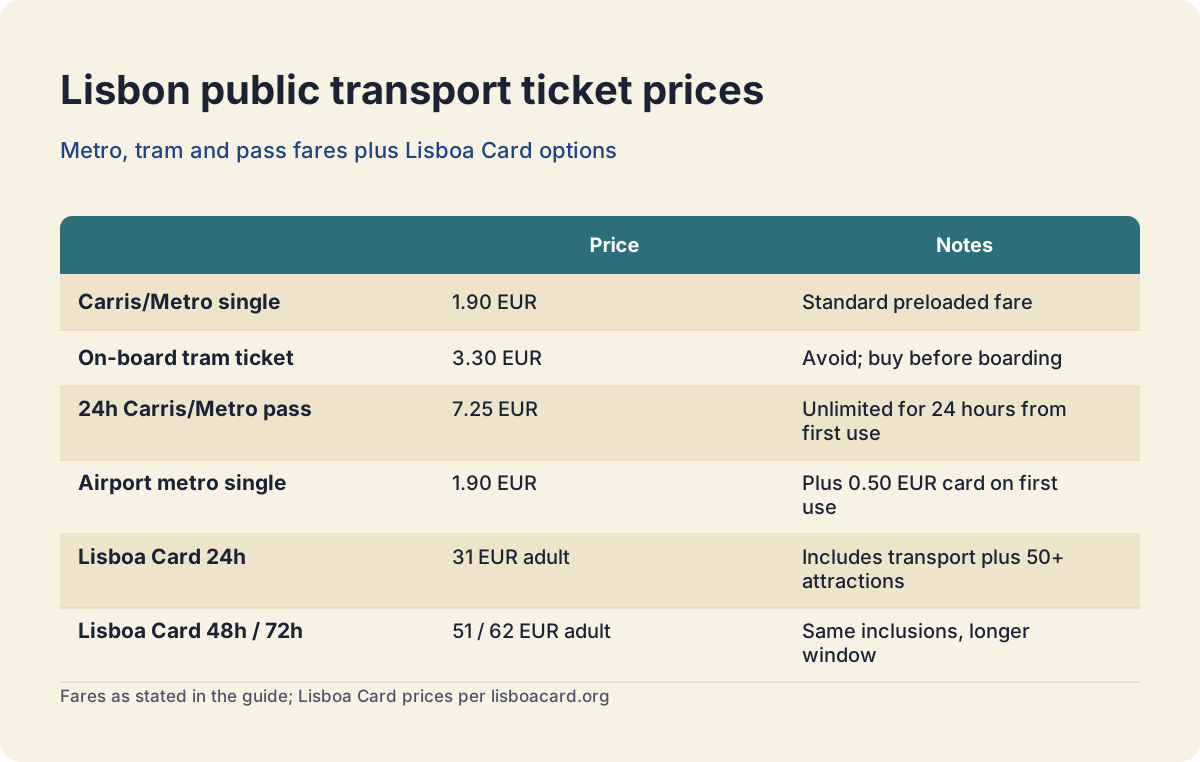
The Carris and Metro single ticket is 1.90 EUR, the 24 hour Carris and Metro pass is 7.25 EUR, and if you buy a ticket on board a tram from the driver it costs 3.30 EUR, so the single biggest transport saving in Lisbon is simply never buying on board. Preload a Viva Viagem card and every ride drops to the standard fare.
| Ticket | Price | Notes |
|---|---|---|
| Carris/Metro single | 1.90 EUR | Standard preloaded fare |
| On-board tram ticket | 3.30 EUR | Avoid; buy before boarding |
| 24h Carris/Metro pass | 7.25 EUR | Unlimited for 24 hours from first use |
| Airport metro single | 1.90 EUR | Plus 0.50 EUR card on first use |
| Lisboa Card 24h | 31 EUR adult | Includes transport plus 50+ attractions |
| Lisboa Card 48h / 72h | 51 / 62 EUR adult | Same inclusions, longer window |
The Lisboa Card bundles unlimited Carris, Metro, trams and CP trains to Sintra and Cascais with free entry to more than 50 attractions, and prices are printed on the official lisboacard.org site. Whether it beats pay-as-you-go depends almost entirely on how many paid monuments you plan to enter; heavy sightseeing in two or three days usually tips it in the card's favour, a relaxed food-and-wandering itinerary usually does not. The Carris 2026 price table is the page to check before you travel, since fares are reviewed annually.
The trains to Sintra and Cascais deserve a place in this section because they are, functionally, part of the city network. The Sintra train leaves Rossio roughly every 20 minutes and takes about 40 minutes. If you would rather not manage palace tickets and bus connections yourself, the Sintra day trips cluster compares the guided alternatives, several of which include palace entry in the listing.
What About The Hills, Tram 28 And The Closed Funiculars?
The Gloria, Bica and Lavra funiculars and the Santa Justa lift are closed to passengers, while the Graca funicular runs again, so any plan that assumed a scenic lift ride up to Bairro Alto or the Carmo terrace needs rethinking. Check Carris for the current status before you build a day around one of them. The closures are the single most common piece of outdated advice travellers arrive with, because older articles and guidebooks still describe the Santa Justa lift as a working attraction.
Tram 28 itself is running, and it remains the classic way to see the old town from a seat rather than on foot, with the usual caveat that pickpocketing is repeatedly reported on it and in the crowded Alfama lanes. The practical alternative that has grown enormously is the private tuk tuk: electric, licensed, and able to climb the lanes a bus cannot. A private tuk tuk of the old town and Alfama starts from 28 EUR per person and takes 1.5 to 4 hours depending on the route, with the vehicle and guide to yourselves for the whole ride. More of these guides are collected on Lisbon Portugal Tours.
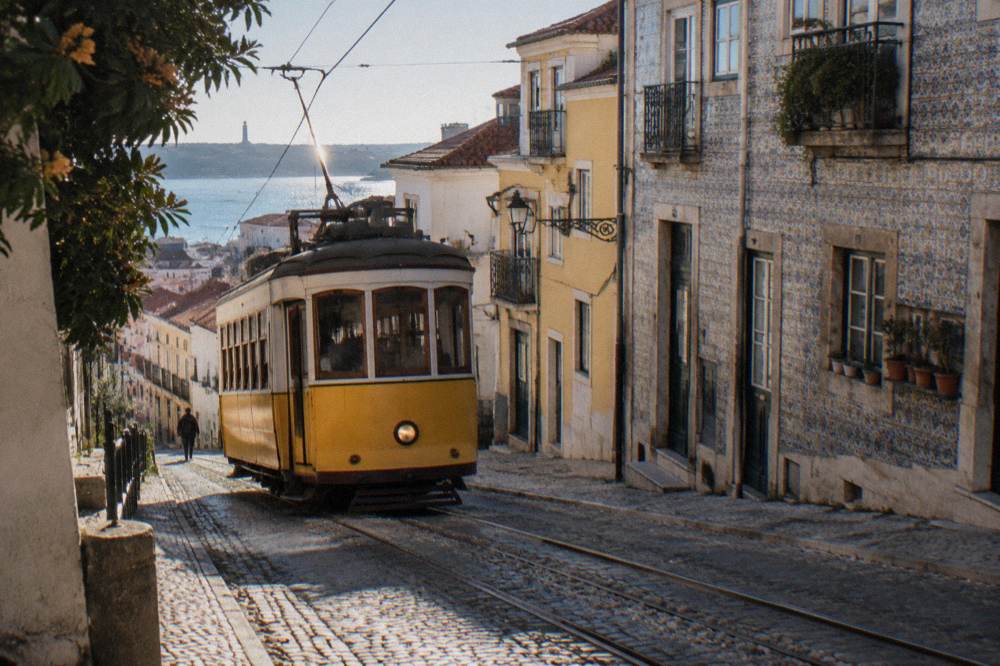
If you want the tram-28 experience without the crush, ride it early in the morning or late afternoon, or take a guided version where the operator manages timing and meeting points. The full route breakdown, including the modified service stretches and the safety picture, lives in the Tram 28 guide. For covering the hills under your own power, the e-bike format has quietly become the locals' answer: a city highlights and viewpoints e-bike tour runs from 29 EUR per person with a 4.9 rating from 2,241 reviews, and the motor flattens every street this article has warned you about.
What Entry Rules Apply To Visiting Lisbon?
The EU Entry/Exit System is in operation at Schengen external borders, recording biometric entry and exit for non-EU travellers, but ETIAS, the visa-waiver pre-authorisation for visitors including US and UK citizens, is not yet accepting applications, so no ETIAS action is needed for a trip you are booking now. The honest phrasing matters here because the rules have shifted dates repeatedly and plenty of third-party articles still print old deadlines.
In plain terms: Americans, Brits and most other visa-exempt nationals continue to enter Portugal with just a passport, as before, but should expect fingerprint or facial capture at the border kiosk under the Entry/Exit System. When ETIAS does go live, it will be an online authorisation with a fee, applied for before travel, and official sources say the exact date will be announced months in advance. The European Commission's smart borders page is the authoritative source to check as your travel dates approach.
Passports should meet the standard Schengen expectation of validity beyond your stay. Nothing else about entering Portugal has changed for tourists: no visa for stays under 90 days for visa-exempt nationalities, and no special documentation beyond the usual. Budget-wise, mid-range daily spending in Lisbon is commonly estimated around 110 to 180 EUR per person including accommodation, food and transport, with budget travellers managing on less; treat those as planning ranges rather than promises, since accommodation swings the number more than anything else.
Which Tours Are Worth Booking On A First Visit?
The formats first-timers book most are a city walking tour on day one, a Sintra day trip on day two, and a food or fado experience in the evening, because each one solves a problem the city's layout creates: orientation, logistics, and venue choice. A guided walk solves orientation, a Sintra tour solves the timed-ticket and bus puzzle, and a food or fado guide solves the where-do-I-even-start problem in a city of tiny taverns.
| Format | Typical price | Duration | What it solves |
|---|---|---|---|
| Small-group walking tour | from 19 EUR | 3-4 hours | Orientation, history, a meal |
| Sintra day trip, max 8 | from 70 EUR | 8 hours | Palace tickets, transport, timing |
| Food and wine walk | from 104 EUR | 3.5 hours | Venue selection, local context |
| Sunset sailing with wine | from 55 EUR | 2 hours | River perspective, an easy evening |
| Fado show with wine | from 15 EUR | 50 minutes | Finding an authentic venue |
| Private tuk tuk | from 28 EUR per person | 1.5-4 hours | The hills, in comfort |
The Sintra entry deserves its own paragraph because it is the most-booked and the most error-prone. Palace tickets are timed and date-reserved; the official Parques de Sintra page lists the Pena Essential Visit at 20 EUR for adults, and a tour with tickets in the listing removes the slot-allocation problem entirely. One guest review of the max-8 Sintra full-day calls it "Nothing short of FANTASTIC. One of the BEST group experience's we've all had in Portugal!" and the listing carries a 4.9 from 4,938 reviews. Beyond Sintra, the wider day trips from Lisbon cluster covers Fatima, Obidos, Nazare, Evora and the wine regions, each with its own trade-offs on distance and time.
Evenings split between food and fado. The Undiscovered Lisbon food and wine tour, capped at 12 guests and running 3.5 hours from 104 EUR, holds a 5.0 rating across 8,702 reviews, one of the deepest review pools on the roster; a guest review praises a guide who was "very knowledgeable, great sense of humor, and provided lots of information about what we were eating and drinking." For fado, a 50-minute show with wine from 15 EUR is a low-commitment first exposure. One reviewer puts it well: "If you're unsure if you'll like the music, this is a wonderful alternative to some of the longer fado shows available, and the multiple times and locations make it easy to fit into your trip." The deeper dive into that question, venues and etiquette, is in is it worth going to a fado show.
How Many Days Do You Need And When Should You Go?
Three days covers the city properly, four lets you add Sintra without rushing, and five opens up a second day trip such as Fatima and Obidos or the Arrabida wine country; on timing, May, late September and October deliver the best balance of mild weather and thinner crowds. The classic error is two days with Sintra squeezed in, which turns both city and palace into a sprint.
A shape that works: day one for Baixa, Chiado and Alfama with a guided morning walk; day two for Sintra and Cascais, a full-day commitment of roughly 8 to 10 hours door to door; day three for Belem, the riverfront and an evening food or fado experience; day four and beyond for a second trip out or slower mornings. If you are weighing the exact split, the how many days are enough in Lisbon post works through it by travel style, and Lisbon Portugal Tours keeps the format pages, from walking to sailing, under one roof for comparing.
Seasonally, June is the most atmospheric month thanks to the Santo Antonio festivals, but it is also the busiest before summer proper. July and August bring the heat, mean daily highs around 28 to 29 degrees, and peak crowds. October sees meaningfully thinner crowds and the city at its autumn calm, though rainfall climbs back up for the month. November belongs to the Web Summit crowd; prices and availability reflect it.
A closing thought on how to spend the money you have budgeted. Lisbon is one of the few capitals where the cheapest tours are genuinely good: the entry-level guided walk costs less than a mid-range dinner, and the fado ticket costs less than two drinks in Bairro Alto. Spend big only where logistics justify it, Sintra with tickets, private wine days, and let the inexpensive formats carry the rest of the week. That is the planning logic this whole site is built around.
Common Questions About Lisbon Travel Planning
What Makes Lisbon Different From Other European Capitals?
Lisbon is built on steep hills above the Tagus, several of its historic lifts are closed to passengers, and its tram network is small and crowded, so planning around the terrain matters more than in flatter capitals.
How Do You Get From The Airport To The Centre?
Take the metro Red Line: a 1.90 EUR single plus a one-time 0.50 EUR card, roughly 30 to 35 minutes to the central interchanges. Fixed taxi fares from the airport run 16 to 19 EUR in the daytime on weekdays.
Are The Funiculars And Santa Justa Lift Open?
The Gloria, Bica and Lavra funiculars and the Santa Justa lift are closed to passengers; the Graca funicular runs again. Check Carris for current status before planning a ride.
Is Tram 28 Worth It?
Yes, with caveats: it runs, it is scenic, and it is crowded, with pickpocketing repeatedly reported. Ride early or late, keep bags in front of you, or take a guided version.
Do US Or UK Citizens Need ETIAS To Visit Lisbon?
Not yet. ETIAS is not accepting applications. The EU Entry/Exit System is in operation at borders, but visa-exempt visitors currently enter with just a passport.
How Many Days Are Enough In Lisbon?
Three for the city, four with Sintra, five with a second day trip. Squeezing Sintra into a two-day stay is the most common itinerary mistake.